



Many people considering fertility treatment worry about safety. It’s common to hear concerns about strong medications, complicated procedures, or possible long-term health effects. From our experience working with patients, these fears often come from uncertainty about how treatment actually works.
In reality, modern fertility treatments are carefully designed and closely monitored to keep patients safe at every stage. Doctors track hormone levels, adjust medications, and guide each step of the process to reduce risks while supporting healthy outcomes. In this article, we explain the safety of fertility treatments, including common side effects, rare risks, and the benefits these treatments can offer to individuals and couples trying to build their families.
How Fertility Treatments Are Designed to Be Safe
Safety is built into every stage of our fertility care. Before any treatment begins, our doctors take time to understand a patient’s overall health, fertility history, and any medical conditions that could influence the treatment plan. This step matters because fertility treatments are never meant to be one-size-fits-all.
In our experience, careful screening at the beginning often prevents problems later. Blood tests, imaging, and fertility evaluations help create a treatment plan that fits the individual rather than following a standard protocol.
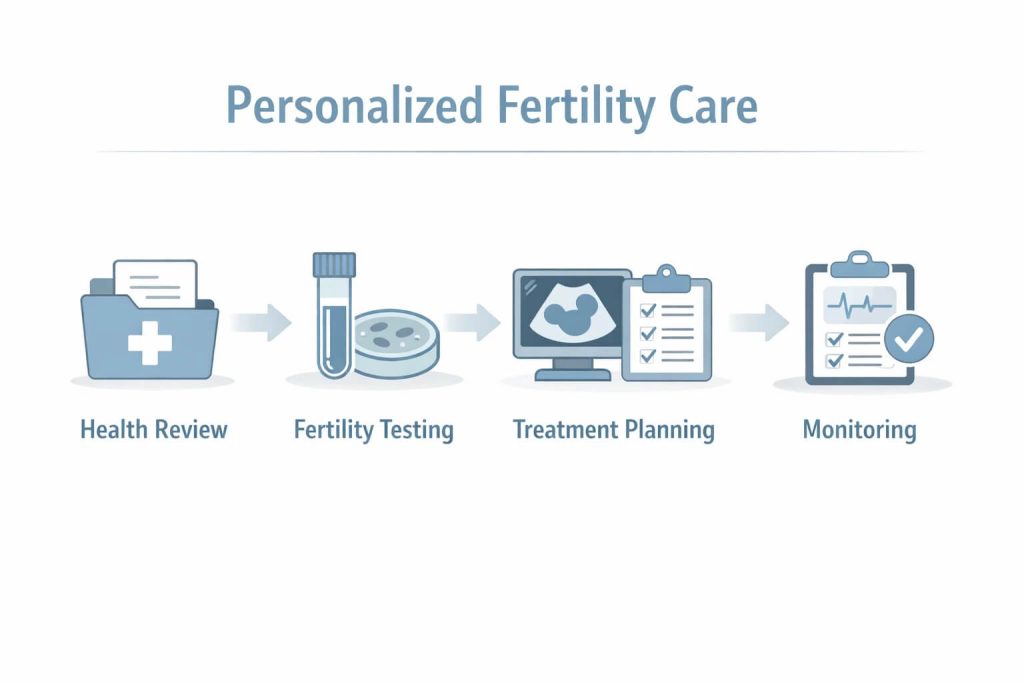
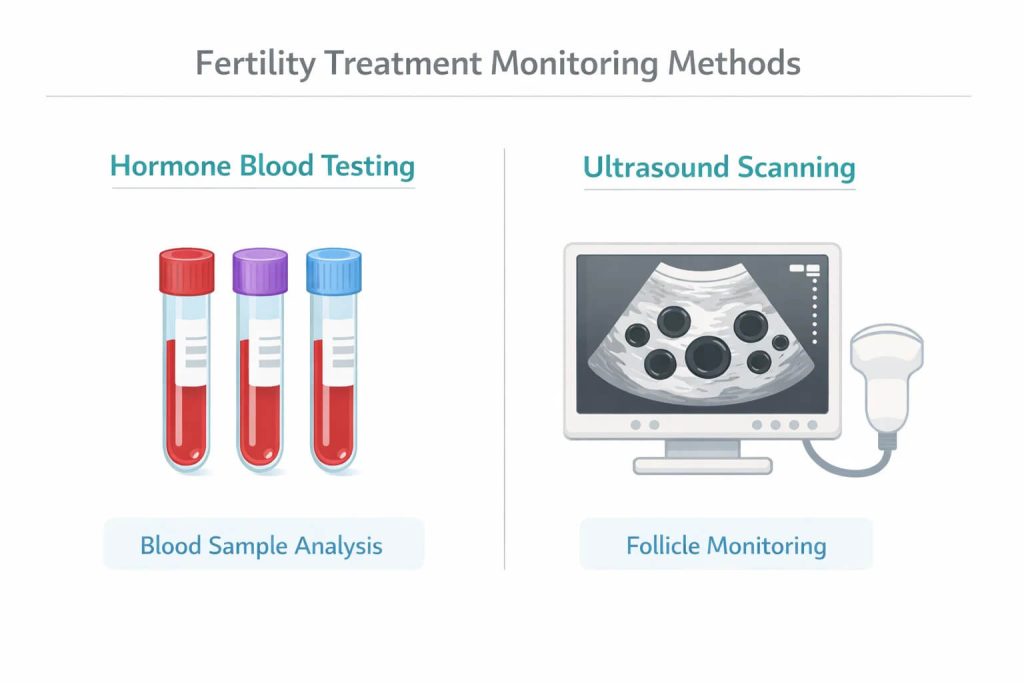
Monitoring then becomes a key part of the process. During treatment cycles, doctors track how the body responds using regular blood tests and ultrasound scans. This allows medication doses to be adjusted when necessary, keeping hormone levels within a safe range and reducing the chance of complications.
Behind the scenes, fertility care also depends on collaboration between specialists. A typical care team includes doctors, embryologists, nurses, and laboratory professionals who work closely together to ensure every step meets strict medical standards. If you’re curious about the people guiding these treatments, meet our fertility team, where we introduce the specialists involved in patient care.
Common Side Effects of Fertility Medications
Fertility medications work by gently encouraging the ovaries to produce eggs or by supporting hormone levels needed for ovulation and pregnancy. Because these medications influence natural hormone cycles, some side effects are expected. In most cases, they are mild and temporary.
Patients often describe symptoms that feel similar to normal hormonal changes. These may include:
- Mild bloating or abdominal fullness
- Headaches
- Fatigue
- Tenderness around injection sites
- Mood changes as hormone levels shift
These effects usually improve once the medication cycle ends. Many people are reassured to learn that fertility teams monitor medication responses closely, adjusting doses when needed.
There’s also an emotional side to treatment that deserves attention. Fertility treatment can bring hope, anticipation, and sometimes uncertainty, all at the same time. Hormonal changes may amplify these feelings, which is completely normal.
Less Common but Important Medical Risks
Most fertility treatments progress smoothly, but like any medical procedure, there are a few risks that doctors watch for carefully. The good news is that these risks are well understood, and modern fertility care includes clear safeguards to keep them rare.
One of the conditions patients sometimes hear about is ovarian hyperstimulation syndrome, often shortened to OHSS. This happens when the ovaries respond too strongly to fertility medications and become swollen or uncomfortable. Symptoms can include abdominal bloating, nausea, or rapid weight gain. Today, careful monitoring and updated medication protocols have made severe OHSS much less common than it was in the past.
Another topic patients often ask about is multiple pregnancy. When more than one embryo implants, twins or higher-order multiples can occur. While many families welcome twins, multiple pregnancies can increase medical risks during pregnancy. Because of this, many clinics now focus on transferring a single high-quality embryo whenever possible.
There are also small risks associated with procedures such as egg retrieval. This procedure involves collecting eggs from the ovaries using a thin needle guided by ultrasound. Complications like bleeding or infection are uncommon, especially when performed by experienced specialists.
Long-Term Safety of Fertility Treatments
Many patients ask an important question before starting treatment: Will fertility treatments affect my long-term health or the health of my baby? It’s a reasonable concern. From what we know through decades of research and clinical experience, the outlook is reassuring.
Large studies have looked at whether fertility medications increase the risk of cancers such as ovarian, breast, or uterine cancer. So far, researchers have not found strong evidence that fertility treatments themselves raise these risks. Most experts agree that underlying fertility conditions, rather than the treatments, are more likely to explain differences seen in some studies.
Another common question relates to babies born through IVF and other assisted reproductive techniques. Today, millions of children around the world have been born through these methods. The majority grow and develop normally.
What has also improved over time is the safety of the treatments themselves. Fertility medicine has evolved significantly. Clinics now use lower medication doses, more precise monitoring, and more personalized treatment plans than in the early years of IVF. These advances help reduce risks while maintaining strong success rates.
The Benefits of Fertility Treatments
While it’s natural to focus on risks, it’s equally important to understand what fertility treatments make possible. Assisted reproductive technologies were developed to solve specific medical barriers to pregnancy. For many people, they provide options that simply didn’t exist a generation ago.
In practical terms, fertility treatments can help address several common challenges:
- Blocked fallopian tubes
- Low sperm count or poor sperm movement
- Ovulation disorders
- Unexplained infertility
How to Choose a Safe Fertility Clinic
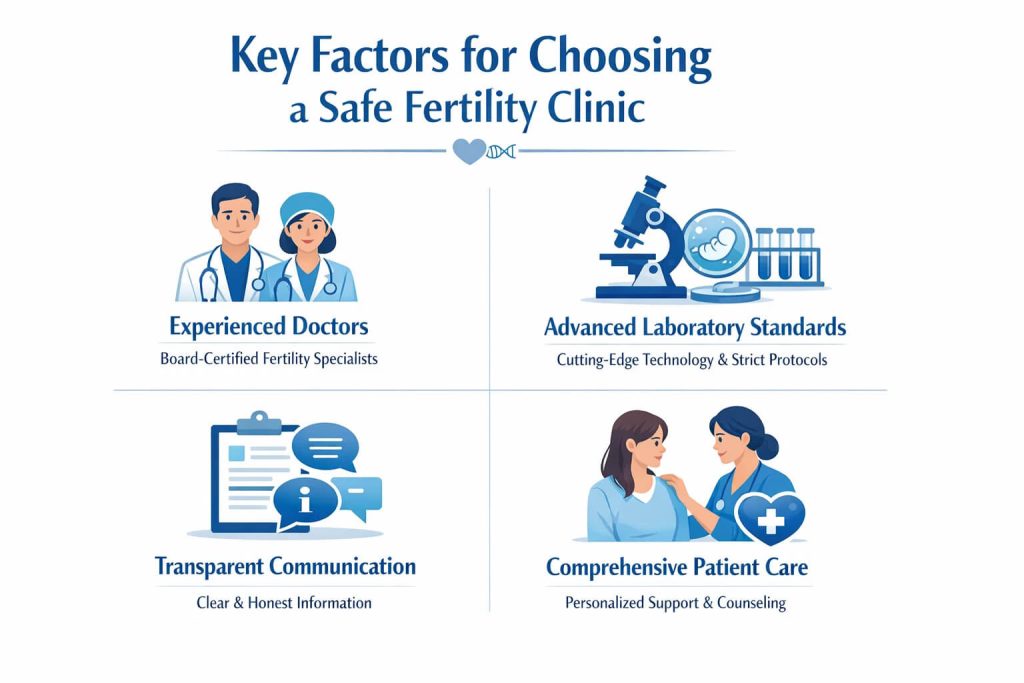
The safety of fertility treatment depends not only on the procedures themselves, but also on where the care is provided. Clinics differ in experience, protocols, and laboratory standards, so choosing the right team matters.
One of the first things to look for is strong clinical oversight. Qualified fertility specialists, experienced embryologists, and well-trained nursing teams all play a role in ensuring treatments are performed safely and consistently.

It’s also worth reviewing a clinic’s medical standards and credentials. Transparent clinics are open about their qualifications, laboratory practices, and safety protocols. If you want to understand how these standards are maintained, you can explore our page on clinical standards and medical credentials, which outlines the guidelines that shape our approach to patient care.
Communication matters just as much as technical expertise. Patients should feel comfortable asking questions about risks, procedures, and expected outcomes. Clinics that prioritize clear explanations and individualized care often create a more supportive treatment experience.
Finally, understanding who will be involved in your care helps build trust. Learning more about Lifespan Birth and the team behind the clinic can give patients confidence that their treatment is being guided by experienced professionals.
What Matters Most When Thinking About Fertility Treatment Safety
- Fertility treatments have been used for decades and are carefully monitored to maintain patient safety
- Most side effects from fertility medications are mild and temporary
- Serious complications, such as severe ovarian hyperstimulation, are uncommon with modern protocols
- Doctors closely track hormone levels and ovarian response throughout treatment
- Millions of healthy babies have been born through assisted reproductive technologies
- Advances in monitoring, laboratory techniques, and personalized treatment plans continue to improve safety
- Choosing an experienced clinic with strong clinical standards helps minimize risks and support better outcomes