


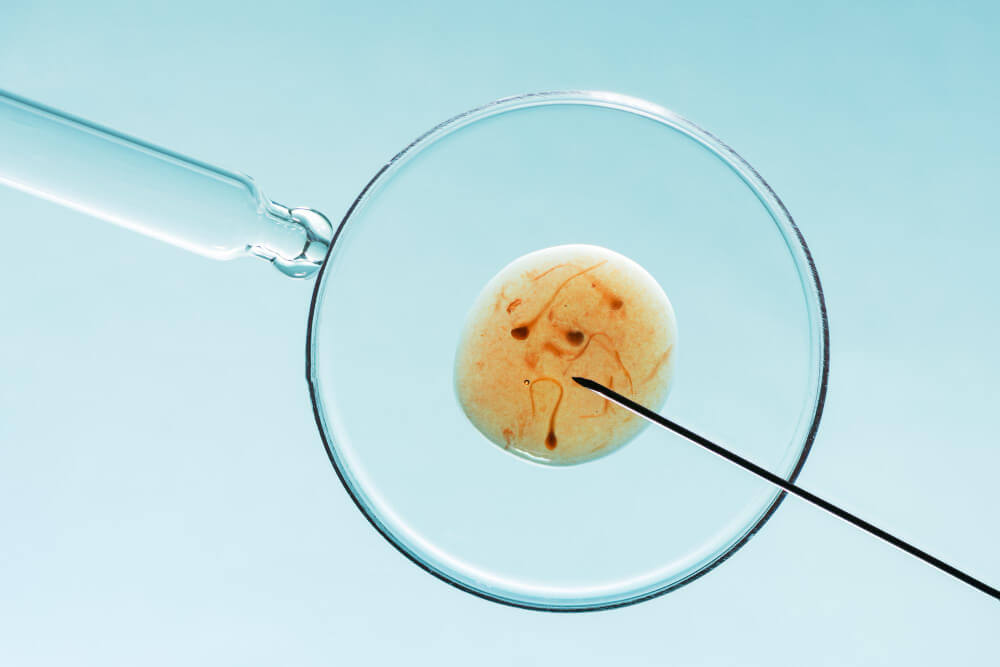
Learning that sperm might need to be collected via a medical procedure can be unexpected or even concerning initially. A lot of individuals believe that the absence of sperm in a semen sample makes fatherhood unlikely. In fact, contemporary fertility treatments provide multiple dependable methods to obtain sperm directly from the reproductive system, even when standard collection is not possible.
Based on our experience with procedures like ICSI, methods such as TESA and PESA frequently offer successful options for men facing specific forms of infertility. This article outlines the specifics of these procedures, highlights their differences, and indicates when each is generally advised. We aim to assist It can be delayed you in realizing your choices and boosting your confidence regarding the journey ahead.
Why Sperm Retrieval Procedures Are Sometimes Needed
The absence of sperm in the ejaculate doesn’t necessarily indicate that the body has ceased their production. In numerous instances, sperm continue to be generated within the testes but are unable to move through the reproductive system. This condition is referred to as azoospermia and can arise due to various causes.
At times, the problem is an obstruction. Prior surgeries, infections, or a vasectomy may inhibit sperm from traveling through the reproductive ducts. In different circumstances, sperm generation can be decreased or inconsistent, indicating that sperm exist in limited quantities within the testicular tissue but are absent in the semen.
Physicians typically examine this thoroughly before suggesting any action. Blood tests, semen evaluations, and imaging assist in identifying the situation.
Common situations where we may perform sperm retrieval include:
- Obstructive azoospermia, where sperm are produced but blocked
- Previous vasectomy or congenital absence of reproductive ducts
- Very low sperm counts where ejaculation samples are unreliable
- IVF or ICSI treatment that requires sperm collected directly from the source
What Is PESA (Percutaneous Epididymal Sperm Aspiration)?
PESA is one of the least invasive sperm retrieval techniques used in fertility treatment. Instead of collecting sperm through ejaculation, the doctor retrieves them directly from the epididymis. This is the small, coiled structure behind the testicle where sperm mature and are stored before ejaculation.
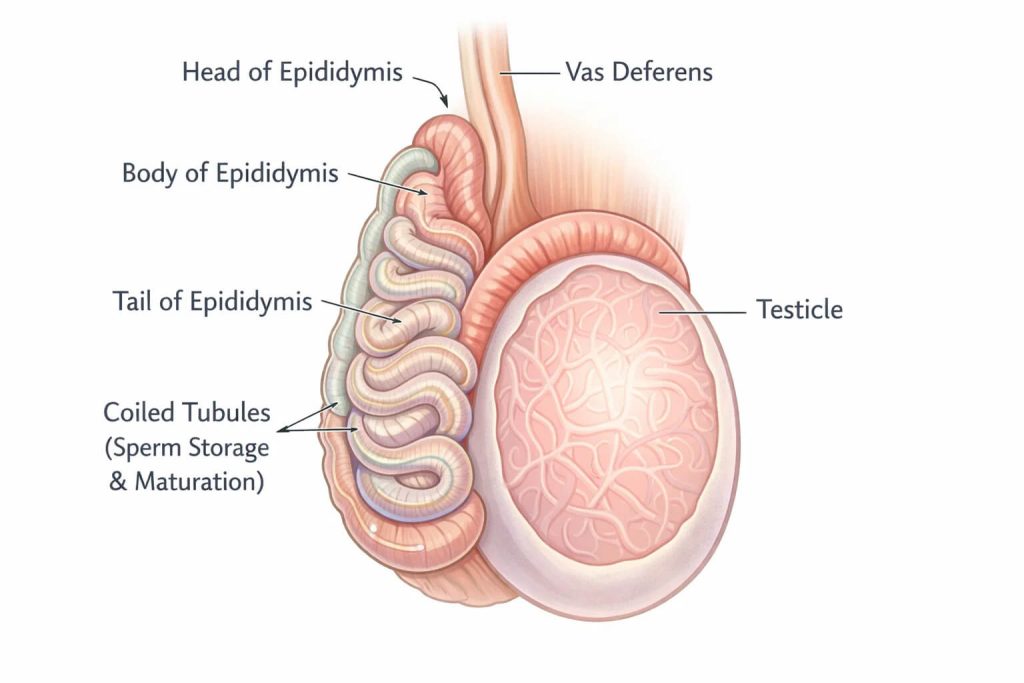
The procedure itself is relatively quick. A fine needle is used to gently retrieve sperm from the epididymis, typically under local anesthesia. Since it is minimally invasive and therefore doesn’t require surgical cuts, the majority of patients feel only slight discomfort and can go home soon after.
PESA is usually advised when sperm creation is normal but obstructed from reaching the semen. This commonly occurs in situations like a past vasectomy or a natural lack of the vas deferens.
Recovery is generally uncomplicated. Slight swelling or tenderness might arise for a day or two, but significant issues are rare. The collected sperm are subsequently processed in the lab and made ready for utilization in IVF or ICSI procedures.
What Is TESA (Testicular Sperm Aspiration)?
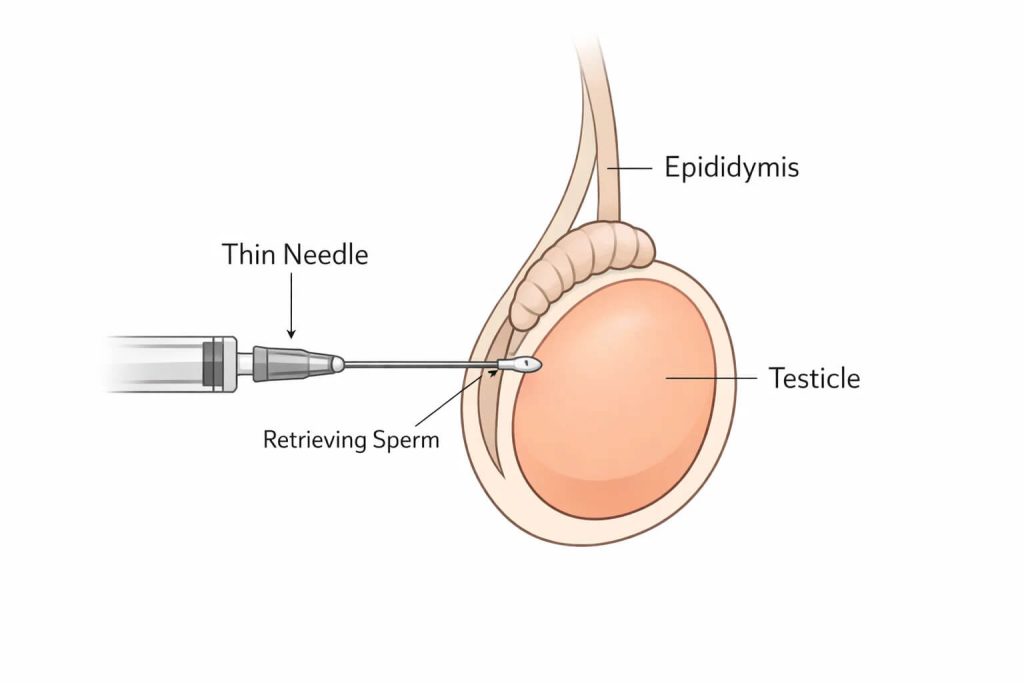
TESA takes a slightly different approach to sperm retrieval. Instead of collecting sperm from the epididymis, the doctor retrieves them directly from the testicle itself. This method is used when sperm may not be present in the epididymis or when production is limited and unpredictable.
The procedure is still relatively quick and usually performed with local anesthesia. A fine needle is inserted into the testicular tissue to collect a small sample. That sample is then examined in the laboratory to identify viable sperm cells that can be used for fertilization.
Our medical team may recommend TESA in situations such as:
- Non-obstructive azoospermia, where sperm production is low
- Cases where previous retrieval attempts from the epididymis were unsuccessful
- Situations where sperm are present only in small pockets within testicular tissue
Key Differences Between TESA and PESA
At first glance, TESA and PESA can sound almost identical. Both procedures are designed to retrieve sperm when it cannot be collected through ejaculation. Both are short outpatient procedures. And both are commonly used alongside IVF treatment.
The main difference comes down to where the sperm are collected from.
PESA retrieves sperm from the epididymis. This is the small tube behind the testicle where sperm mature and are stored before ejaculation. When sperm production is normal but blocked from leaving the body, this area often contains a healthy supply.
TESA, on the other hand, retrieves sperm directly from the testicle itself. Doctors use this approach when sperm are not reaching the epididymis or when production is limited and sperm must be located within the testicular tissue.
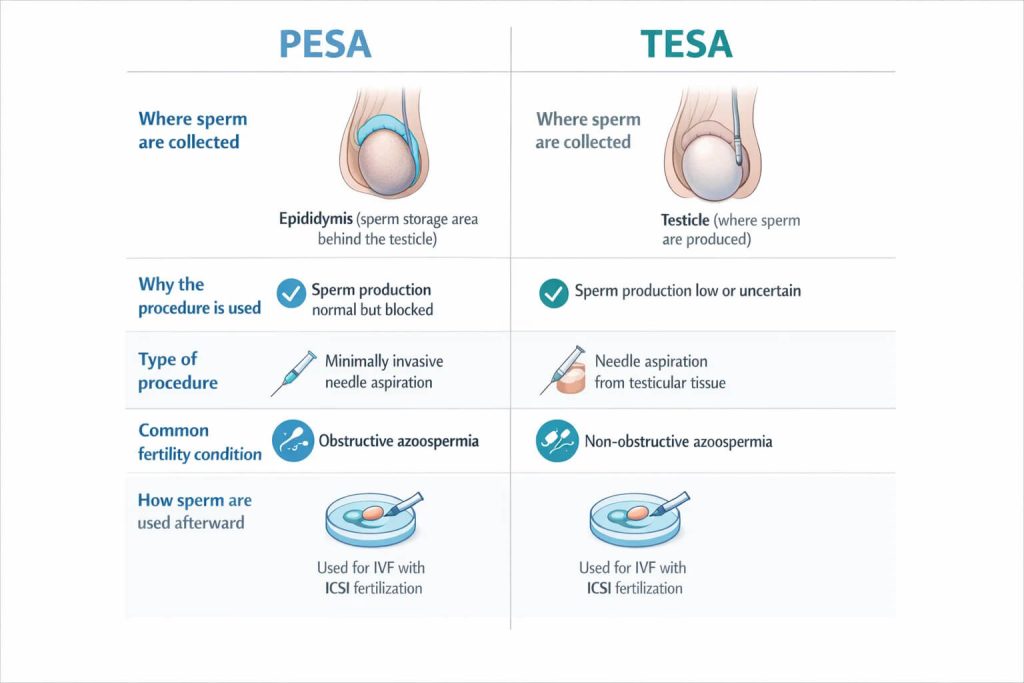
Here is a simple way to think about it:
- PESA collects sperm from the storage area behind the testicle
- TESA collects sperm from inside the testicle where sperm are produced
Another key difference is why each procedure is recommended. PESA is usually chosen when there is a blockage preventing sperm from traveling normally. TESA is more often used when sperm production is reduced or when doctors are unsure where viable sperm may be found.
How Our Medical Team Recommend Which Procedure Is Right
Choosing between PESA and TESA isn’t random. Doctors look carefully at several pieces of information before recommending one approach over the other. The goal is always the same: use the simplest and most effective method based on what’s happening in the body.
The process usually starts with a detailed review of medical history and previous test results. For example, if a man has had a vasectomy or a known blockage in the reproductive tract, sperm are often still being produced normally. In those cases, retrieving sperm from the epididymis with PESA is often the first option considered.
Other situations require a different approach. When sperm production is uncertain or very low, doctors may recommend retrieving sperm directly from the testicle.
Several factors help guide the decision to choose TESA or PESA:
- Results from semen analysis tests
- Hormone levels that indicate how sperm production is functioning
- Past surgeries or known blockages
- Genetic testing in certain cases
- Ultrasound or physical examination findings
What Happens After Sperm Retrieval
Once sperm have been retrieved through PESA or TESA, the next steps take place in the laboratory. This is where embryologists carefully examine the sample to find viable sperm cells. Sometimes they are easy to identify. Other times, they are present in very small numbers and must be located under high magnification.
When viable sperm are found, they are prepared for use in fertilization. In most cases, the technique used is ICSI, which stands for intracytoplasmic sperm injection. Instead of allowing sperm to fertilize an egg naturally in the lab dish, an embryologist injects a single sperm directly into an egg. This method is especially helpful when sperm numbers are low.
There are also situations where sperm retrieved during the procedure are frozen for later use. This process, called cryopreservation, allows the sperm to be stored safely and used in future IVF cycles if needed.
What happens next usually depends on the treatment plan. Some patients proceed directly to IVF. Others store sperm while additional testing or preparation takes place.
Understanding Your Options With Confidence
Learning that a sperm retrieval procedure may be needed can feel overwhelming at first. However, many patients find reassurance once they understand how these procedures work and why they are recommended. Both PESA and TESA are well-established techniques that allow doctors to retrieve sperm safely when it cannot be collected through ejaculation.
The most important point is that these procedures expand the possibilities for treatment. Even when sperm are not present in a semen sample, viable sperm may still be available within the reproductive system. With modern laboratory techniques such as ICSI, those sperm can often be used successfully in IVF treatment.
If you’re exploring sperm retrieval procedures or have been advised that one may be helpful, our team at Lifespan Birth can guide you through the process and explain which option may be most appropriate for your situation. Every case is different, and having experienced specialists review your results can make the next steps much clearer. When you’re ready to explore your options further, contact our team to support you with thoughtful care and personalized guidance.
The Key Differences Between TESA and PESA
- Both procedures retrieve sperm when ejaculation samples do not contain viable sperm
- PESA retrieves sperm from the epididymis, the storage area behind the testicle
- TESA retrieves sperm directly from the testicle where sperm are produced
- PESA is often used when there is a blockage preventing sperm from reaching the semen
- TESA is more commonly used when sperm production is low or uncertain
- Retrieved sperm are usually used in IVF treatment with ICSI