



People experience both positive and negative emotions when they schedule their first fertility consultation. Patients usually have concerns that their upcoming appointment will either take too long or medical personnel will pressure them into treatment before they are prepared. Your first consultation exists to learn about your situation and our medical team will not make any treatment choices at this time.
In this article, we describe the typical procedures that occur during an initial fertility visit and the method our doctors use to discuss these procedures with patients. The session covers all discussion points, such as which tests doctors will recommend and the process for determining future medical treatment. Our goal is to provide you with the necessary tools to move forward with this critical first step while maintaining your confidence and comfort.
What Happens Before the Appointment
The consultation process requires several preparatory steps which need to be completed before the actual consultation time begins. The preparation work enables us to use your time more effectively while we establish our path through the consultation which will include topics that you need to research beforehand.
The medical questionnaires which you will fill out require you to provide information about your past pregnancies and menstrual cycles and previous treatments and relevant health conditions. Male partners must provide their basic health background information along with details about any earlier fertility evaluations they have undergone.
It’s also a good idea to think about the questions you want to ask. Some people bring a short list. Others prefer to talk things through naturally. There’s no right approach. What matters is that concerns, even ones that feel small or uncertain, are raised early so they can be addressed clearly and honestly.
What Doctors Discuss During the Consultation
Once the consultation begins, the focus shifts to conversation. This is where we listen carefully and start connecting the dots.
We usually begin by reviewing your fertility history. How long you’ve been trying. What your cycles are like. Whether there have been previous pregnancies, treatments, or losses. These details matter because they often point toward patterns that aren’t obvious on their own.
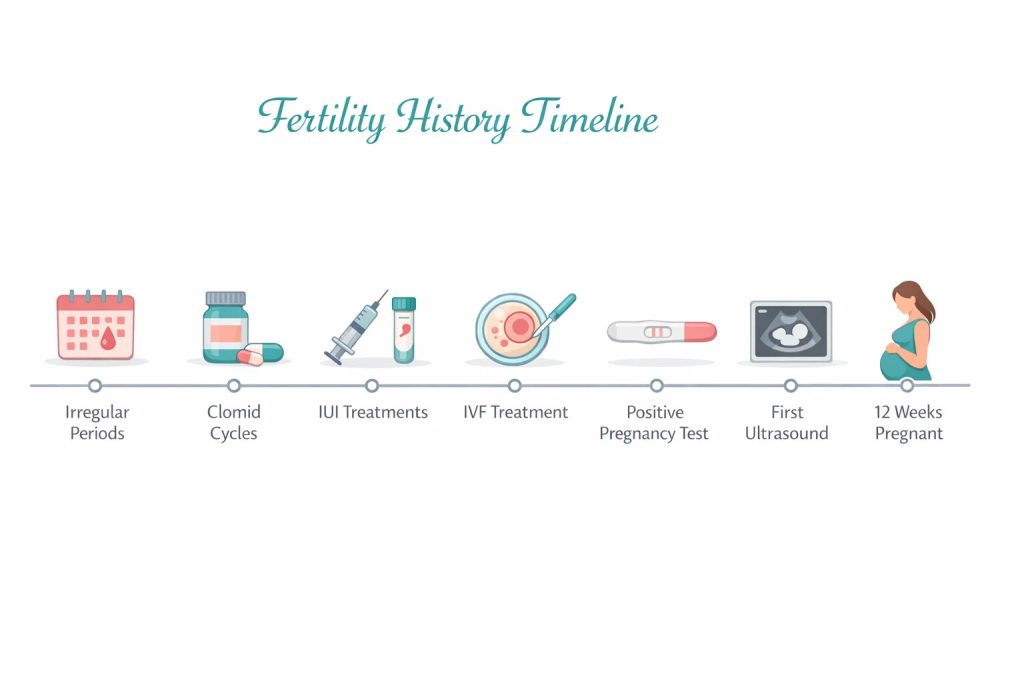
The discussion then widens. We talk about your goals, not just medically, but personally. Some people want to move quickly toward treatment. Others want to understand their options and take things step by step. There’s space for both.
Tests That May Be Recommended
After reviewing your history, we often discuss testing. The process requires different tests for different individuals, and some tests need to be conducted after a specific time. Our testing procedure aims to achieve valuable results through testing activities.
Women require blood tests to measure their hormone levels and ultrasound scans to examine their ovaries and uterus. The tests provide insights into the standard cycle patterns and the current ovarian reserve capacity. Semen analysis serves as the primary diagnostic tool for men, as it reveals their sperm count and movement, along with shape.
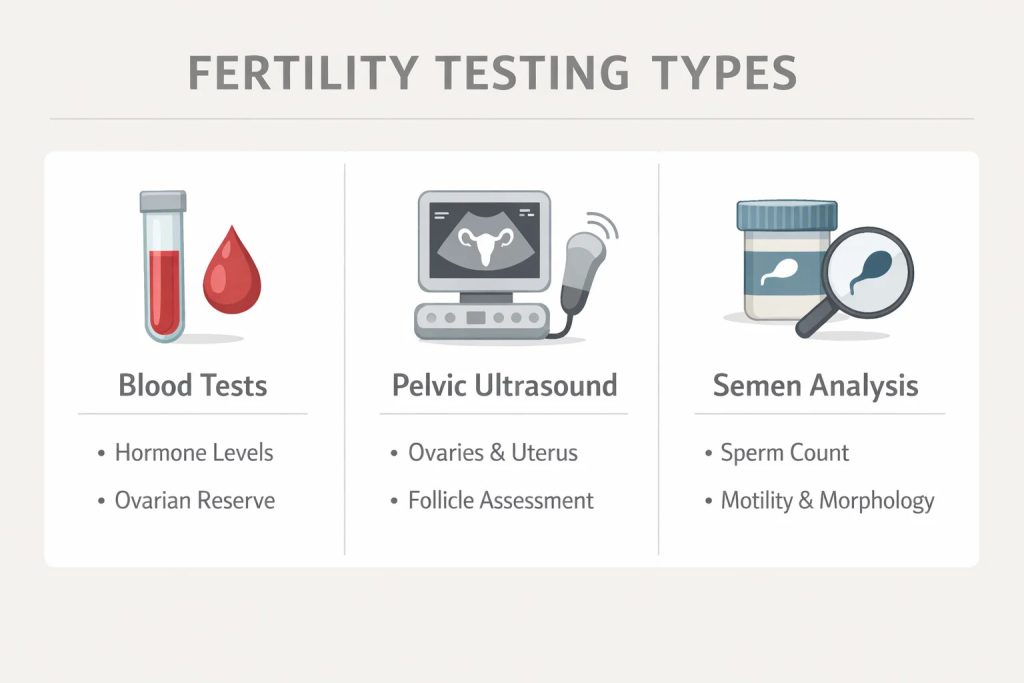
Some tests depend on timing. Certain blood tests are done on specific cycle days, while others can be scheduled more flexibly. Because of this, testing is often spread over more than one visit.
Discussing Possible Treatment Pathways
Once enough information is available, we begin talking through what the results may mean and what options could follow. This part of the conversation is often more flexible than people expect.
For some patients, treatment isn’t needed right away. We may suggest monitoring cycles, adjusting timing, or making lifestyle changes before considering medical intervention. In these cases, having clear guidance on what to try and for how long can feel reassuring rather than passive.
When assisted treatment is discussed, it’s presented as one of several possible paths. Options like IUI or IVF may come up depending on age, test results, and personal goals. In certain situations, more advanced techniques such as ICSI are considered, particularly when sperm-related factors affect fertilization.
Your First Steps, Clearly Explained
A first fertility consultation is designed to create understanding, not pressure. It’s a starting point where questions are welcomed, concerns are taken seriously, and decisions are guided by evidence rather than assumptions. By reviewing your history, discussing appropriate testing, and exploring possible pathways, our goal is to help you move forward feeling informed and supported.
If you’re preparing for your first visit or considering whether to book one, at Lifespan Birth, we offer a thoughtful, individualized approach rooted in experience and clear communication.
What to Expect at Your First Fertility Consultation
- The first visit focuses on understanding, not immediate treatment decisions
- Medical history and personal goals guide all discussions
- Testing is suggested thoughtfully and may be scheduled over time
- Treatment options are explained, not assumed
- Patients are encouraged to ask questions and take time to reflect
- Clear next steps are outlined before the appointment ends