



If you’ve been trying to get pregnant and it’s not happening as quickly as you hoped, you’re not alone, and you’re probably wondering when it’s time to talk to a doctor. Is it too soon? Should you wait a few more months? These are common questions, and the answer depends on a few important factors.
In this article, we’ll walk you through when to seek fertility support based on your age, how long you’ve been trying, and any existing health concerns. Our goal is to give you simple, clear guidance, so you know when it’s the right time to take the next step, and what to expect when you do.
Understanding Fertility Timelines
How Long Does It Normally Take to Get Pregnant?
Most healthy couples conceive within a year of trying. In fact:
- Around 80% of couples will get pregnant naturally within the first 12 months.
- That number rises to 90% after two years, if you’re having regular, unprotected sex.
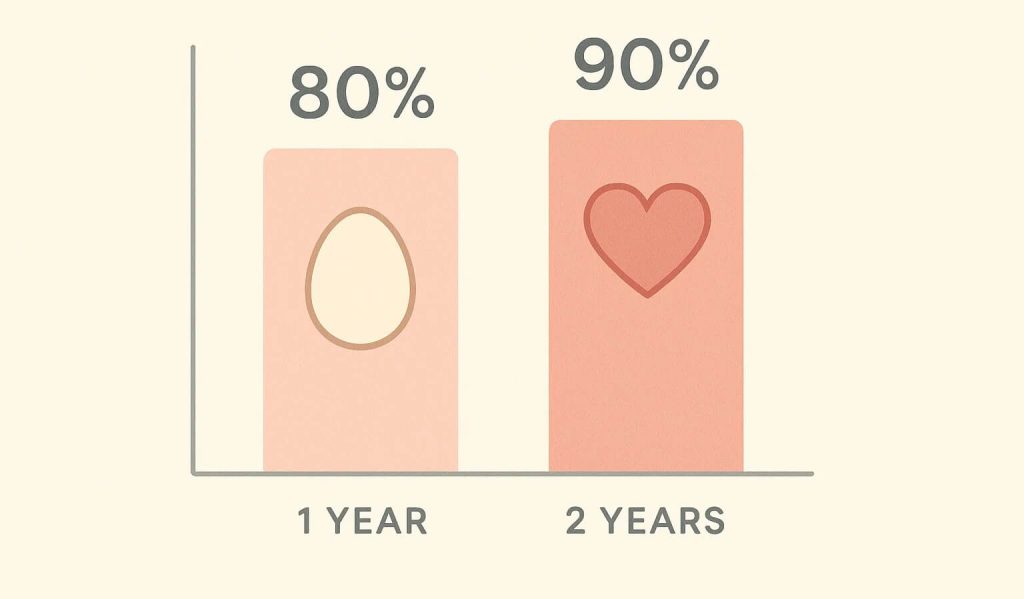
But while time is a factor, it’s not the only one. Your age also plays a key role in how likely you are to conceive.
Age, Fertility and What You Should Know
Fertility tends to decline gradually starting around age 30, with a sharper drop after age 35.
Here’s what most experts recommend:
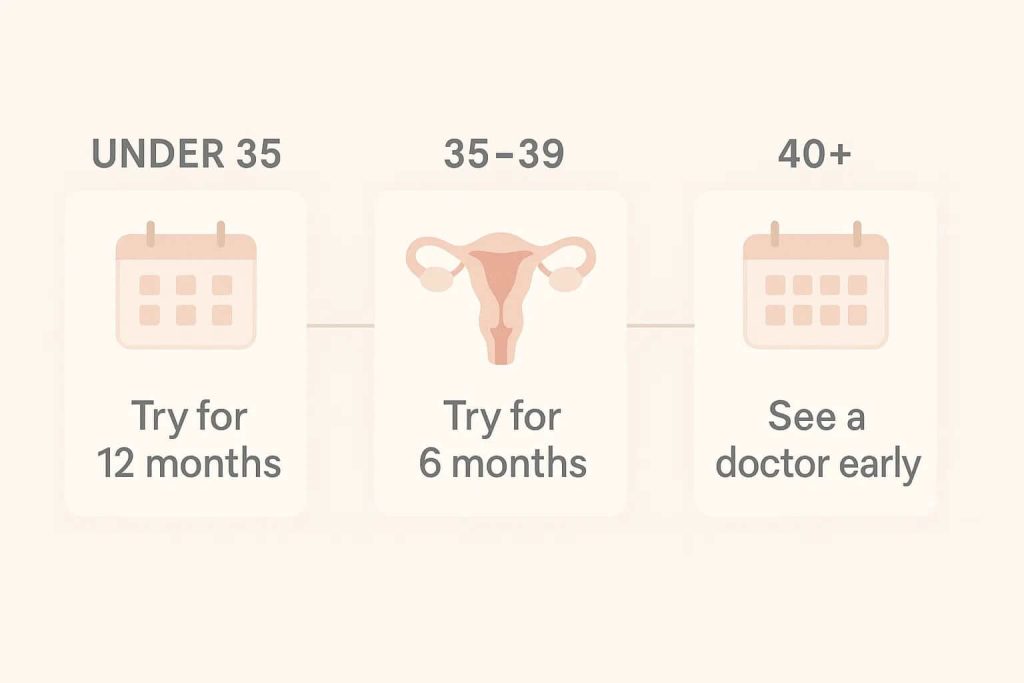
Under age 35: Try for up to 12 months before speaking to a doctor.
Age 35 or older: Talk to a specialist if you haven’t conceived after 6 months.
Age 40 or above: It’s usually best to check in with a fertility specialist early on, even if you’ve just started trying.
When to See a Specialist Sooner
General guidelines suggest waiting 6 to 12 months before seeing a doctor, but some situations call for earlier attention.
Medical History That May Affect Fertility
You don’t need to wait a full year if you’ve had:
- Irregular or missing periods
This may be a sign of ovulation issues, like PCOS or thyroid imbalance. - Known reproductive conditions
Such as endometriosis, fibroids, or past pelvic infections. These can affect the uterus or fallopian tubes. - Surgery on your ovaries, uterus, or pelvis
Scar tissue or structural changes might reduce the chance of natural conception.
Pregnancy Loss or Male Factor Concerns
Miscarriage is more common than many people realise. But if you’ve experienced:
- Two or more miscarriages, it’s worth speaking to a specialist to check for underlying issues.
- Male fertility issues, such as low sperm count, poor motility, or erectile difficulties, these should be addressed right away.
What Happens at Your First Appointment
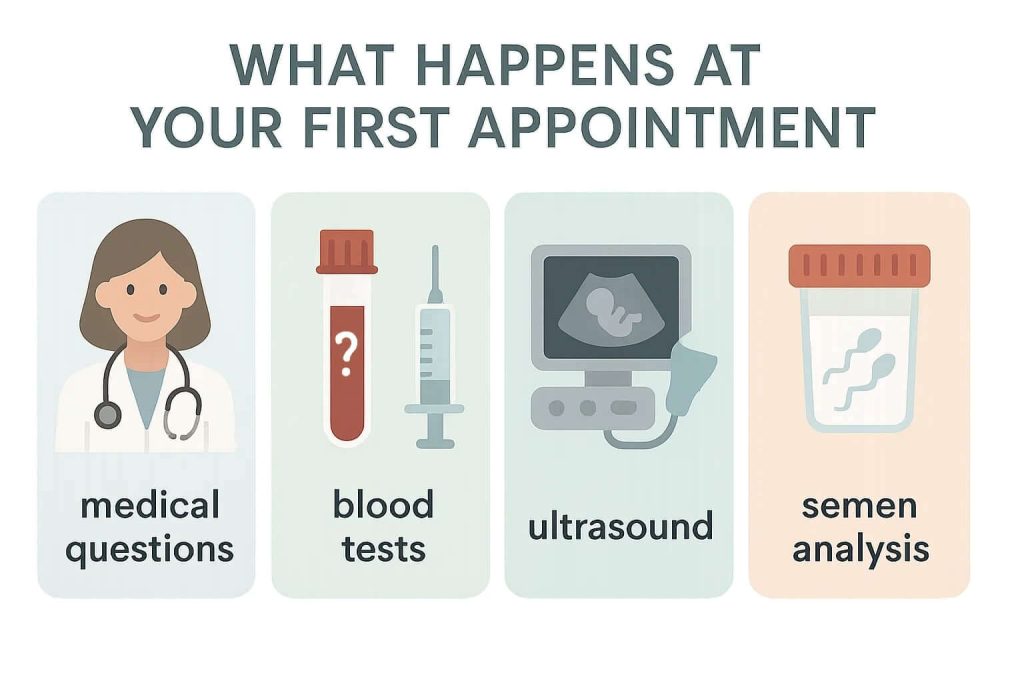
Taking that first step and seeing a doctor is often the easiest way to get clarity and a plan. Here’s what you can expect.
A Conversation First
Your doctor or fertility specialist will begin by asking questions such as:
- How long you’ve been trying
- Whether your periods are regular
- If you’ve had any past pregnancies, miscarriages, or surgeries
- Your lifestyle, stress levels, and any family history of fertility issues
Basic Fertility Testing for Both Partners
Depending on your situation, your provider may recommend:
- Blood tests to check hormone levels like AMH (a marker of egg reserve), FSH, LH, and TSH (thyroid).
- Ultrasound scan to examine your uterus and ovaries, check for cysts, fibroids, or signs of ovulation.
- Semen analysis for your partner, looking at sperm count, shape, and motility.
What the Results Can Tell You
While no single number gives a full answer, these results can help identify:
- Whether you’re ovulating regularly
- If your egg reserve is low
- If your partner’s sperm may be a factor
- Whether to try naturally longer or consider options like IUI or IVF
When It’s Time to Seek Support
Knowing when to stop waiting and start asking questions can save you months, or even years, of uncertainty.
Clear Signs It’s Time
Some signals are more than just “bad luck” or timing. Talk to a doctor if:
- You’re under 35 and have been trying for 12 months without success
- You’re 35 or older and have been trying for 6 months
- Your periods are irregular, missing, or unusually painful
- You’ve had multiple miscarriages
- You or your partner have known fertility-related health issues
Personal Clues That Matter Too
Sometimes it’s not about a strict timeline. Other reasons to seek help include:
- Feeling anxious or overwhelmed about trying to conceive
- A strong desire to understand your fertility health now, even if you’re not ready for treatment
- Wanting to freeze eggs or embryos due to life plans, age, or medical reasons
If you’re not sure how to begin, at Lifespan Birth we offer supportive, judgment-free consultations to guide your next steps.