



Unused embryos after IVF are usually frozen and stored while patients decide what to do next. If you are wondering what happens to unused embryos after IVF, the main options may include keeping them for future use, using them in a frozen embryo transfer, donating them to another person or couple where available, donating them for research where allowed, or allowing them to be thawed and disposed of according to consent and our clinic policy.
This decision can feel emotional, especially after successful treatment, unsuccessful treatment or a change in family plans. Some patients feel grateful to have embryos stored, while others may feel unsure about what the right next step should be.
Your options can vary depending on the clinic, local law, signed consent forms and both partners’ wishes where relevant. This is why embryo decisions should be discussed carefully before, during and after IVF treatment.
Unused Embryos After IVF
- Unused embryos are usually frozen and stored after an IVF or ICSI cycle.
- Patients may choose to use frozen embryos later for another embryo transfer.
- Embryo donation may be an option, depending on clinic policy and local regulations.
- Research donation may be possible in some settings, but it is not available everywhere.
- Disposal usually requires written consent and follows the clinic’s procedures.
- Decisions about unused embryos should be reviewed with the fertility clinic before treatment begins and again before storage decisions are changed.
Why Are There Unused Embryos After IVF?
During the IVF process, eggs are collected and fertilized in a lab to create embryos. If more suitable embryos are created than are transferred, the remaining embryos may be frozen for possible future use.
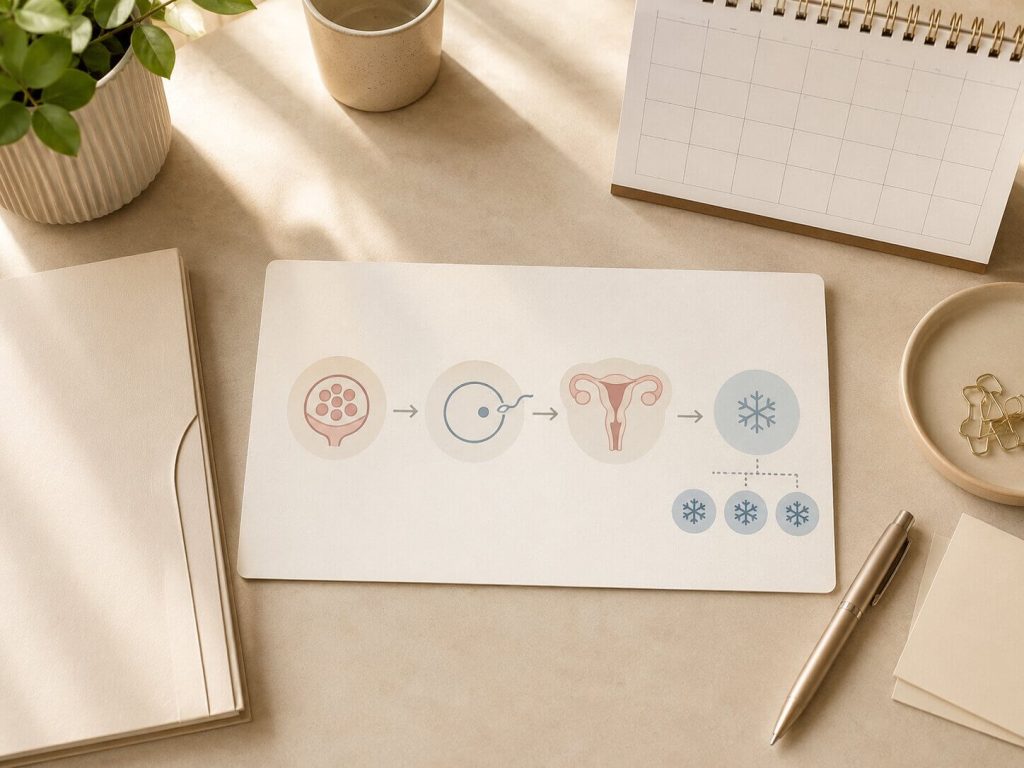
Our clinic usually transfers a limited number of embryos at one time to reduce the risk of multiple pregnancy, such as twins or triplets. This approach can help protect the health of the patient and any future baby, but it can also mean that embryos are left after treatment.
How Are Unused Embryos Stored?
Suitable embryos can be frozen through a process called cryopreservation, this means embryos are preserved at very low temperatures in a specialist laboratory so they may be stored for possible future treatment.

Frozen embryos may remain in storage if the required consent and storage arrangements are in place. Some patients later use these embryos in a frozen embryo transfer, while others may continue storage while they decide what feels right for their situation.
Option 1: Keep Embryos Frozen for Future Use
Patients who may want another child in the future may choose to keep suitable embryos frozen for a later transfer. This can give them another possible pregnancy attempt without repeating ovarian stimulation and egg retrieval.
Frozen embryos may be used months or years later. For some patients, this makes the decision feel less urgent. For others, continued storage can also delay a difficult choice about what to do with embryos they may not use.
Before deciding to continue storage, patients should review their age, overall health, family plans, storage fees and any renewal requirements. Learn more about how our fresh and frozen embryo transfer options may fit your future treatment plan.
Option 2: Use Frozen Embryos in Another Transfer
If patients are ready to try for pregnancy again, our team may prepare for a frozen embryo transfer. In this process, the embryo is thawed, the uterine lining is prepared, and the embryo is transferred at the time the doctor considers most suitable.
Not every thawed embryo will be suitable for transfer, but modern freezing methods are designed to preserve embryo quality as much as possible. Before planning the transfer, our specialists may review embryo quality, previous transfer results, uterine lining response and any genetic testing that was done.
This review can help our care team decide whether the timing, preparation plan or transfer approach should be adjusted. Patients may also want to ask how their individual situation relates to general embryo transfer success rates.
Option 3: Allow Embryos to Be Thawed and Disposed Of
Some patients decide not to continue storage and not to use or donate their embryos. In this situation, we may thaw and dispose of the embryos according to written consent, clinic policy and local rules.

This decision can feel emotionally difficult, even when it is the right choice for the patient or couple. Some people may want more time before signing forms. Others may find it helpful to speak with a counselor, talk with their partner or choose a private way to mark the decision. NPR’s report on leftover embryos after IVF reflects how personal and complex this decision can feel for some families.
Give Yourself Time to Make a Clear Decision
Feeling unsure about unused embryos is common. These decisions can be emotional, even when the medical process itself is straightforward. Patients may feel differently depending on their treatment outcome, family plans and personal values.
Before making a final decision, review the consent forms, speak with our fertility team and ask which options are available in your specific situation.
At Lifespan Birth, patients can ask questions, review their options and take the next step with clearer expectations. Give yourself time to understand the decision before changing storage, consent or treatment plans
Common Concerns About Unused Embryos After IVF
What happens to unused embryos after IVF?
Unused embryos are usually frozen and stored while patients decide what to do next. Options may include using them later, continuing storage, donating them, donating them for research where allowed, or allowing them to be disposed of according to consent and our clinic policy.
Can unused embryos be used for another pregnancy?
Yes, unused embryos may be thawed and used in a frozen embryo transfer if they remain suitable and the patient is medically ready. Our team will usually review embryo quality, treatment history and uterine preparation before planning the transfer.
Do unused embryos have to be discarded?
No. Disposal is one option, but it is not the only option. Some patients keep embryos frozen, use them in a future transfer, or consider donation where available and appropriate under clinic policy and local rules.
Can embryos be donated to another couple?
Embryo donation may be possible in some places and clinics, but availability varies. It usually requires written consent, medical screening, counseling and legal review. Patients should ask their clinic what options are available in their specific situation.
Can embryos be donated to science?
Research donation may be available in some settings, but not all clinics or regions allow it. Patients should ask whether research donation is offered, what the embryos may be used for, and what consent is required before any decision is made.