


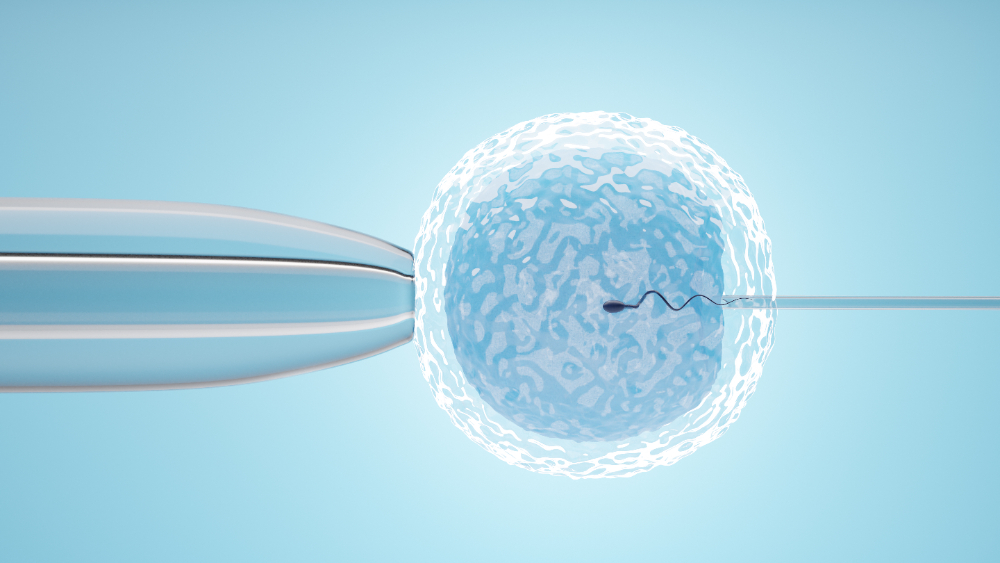
Choosing between fresh and frozen embryo transfers is one of the numerous important considerations that in vitro fertilization (IVF) calls for. At Lifespan Birth, we know that this decision may be unsettling. The following article seeks to clarify both choices so that you may select the most appropriate fit for your particular situation.
Understanding Embryo Transfer Options
Usually three to five days after egg retrieval, fresh embryo transfer involves transferring embryos into the uterus soon after fertilization. The procedure consists of stimulating the ovaries to produce multiple eggs, extracting them, fertilizing them in a lab, and then transferring the produced embryos into the uterus in the same cycle.
In frozen embryo transfer (FET), embryos are cryopreserved—that is, frozen—after fertilization and kept for use later on. These embryos are then thawed and transferred into the uterus when you are ready. If the first IVF round produces surplus embryos, this approach may be very helpful as it allows for flexibility in timing.
Comparing Success Rates of Fresh vs. Frozen Embryo Transfer
The success of IVF mostly rests on having a healthy pregnancy and live birth. Studies of fresh and frozen embryo transfers have shown interesting results:
Clinical Pregnancy and Live Birth Rates: One research found that frozen blastocyst transfers (embryos developed for five to six days) demonstrated greater rates of clinical pregnancy and live births compared to fresh blastocyst transfers.
Age Considerations: Age has an important influence in IVF success. Data shows that women aged 38 and beyond had higher pregnancy rates with frozen embryo transfers compared to fresh transfers.
Safety and Health Outcomes
Beyond success rates, the safety of both the mother and the baby is of utmost importance:
Ovarian Hyperstimulation Syndrome (OHSS): This is a possible consequence of fertility treatments when ovaries become enlarged and painful as a result of excess hormone stimulation. Studies have revealed that frozen embryo transfers are related with a lower risk of OHSS compared to fresh transfers. This is because the hormonal environment has time to restore to normal before embryo implantation takes place.
Perinatal Outcomes: Research suggests that singleton newborns (single child born in a pregnancy) conceived by frozen embryo transfer are at a reduced risk of preterm delivery (birth before 37 weeks), low birth weight (less than 5.5 pounds), and being smaller for gestational age than those conceived via fresh embryo transfer.
Technological Advancements Influencing Outcomes
Advancements in reproductive technologies have dramatically influenced the effectiveness of both fresh and frozen embryo transfers:
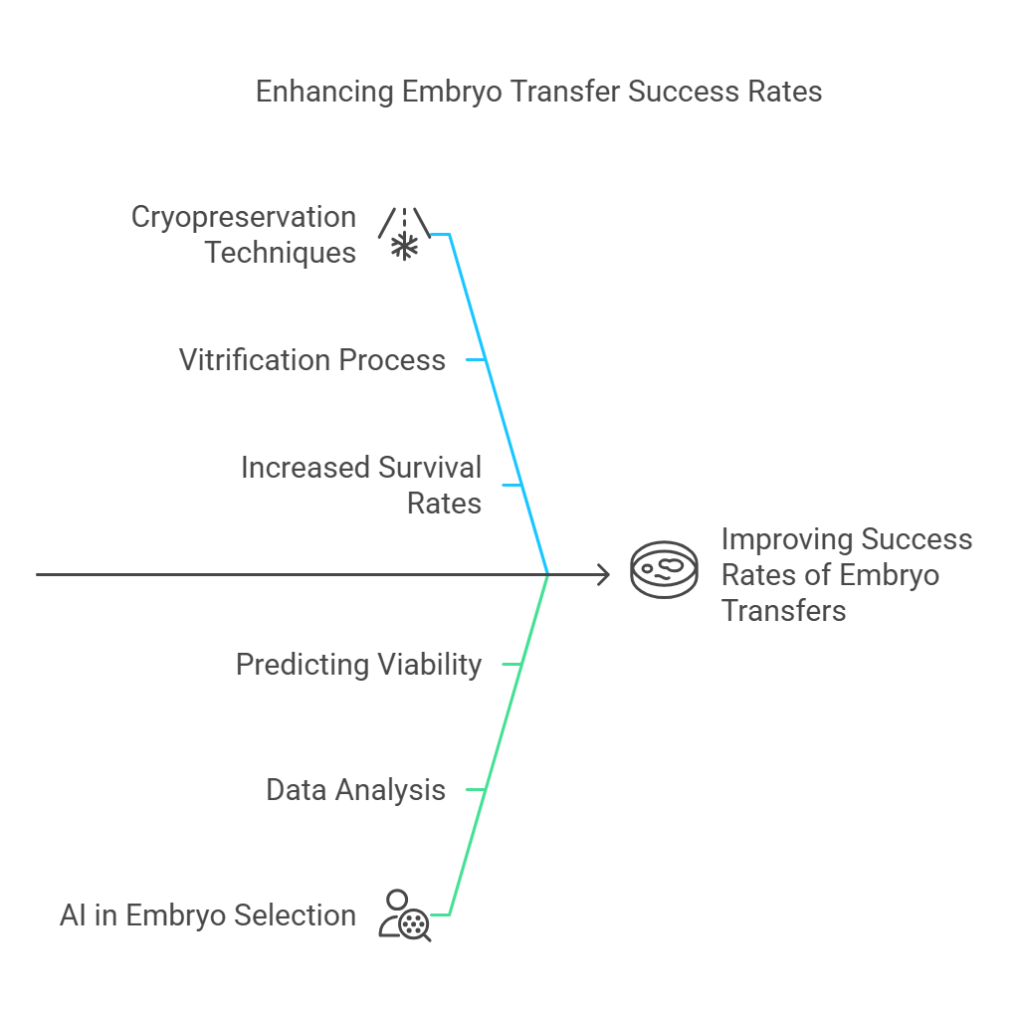
Cryopreservation Techniques: The advancement of cryopreservation procedures, notably vitrification (a rapid freezing process that avoids ice crystal formation), has considerably increased the survival rates of thawed embryos, consequently boosting the success rates of frozen embryo transfers.
Artificial Intelligence in Embryo Selection: The integration of artificial intelligence (AI) into embryo assessment is transforming IVF techniques. AI systems examine vast datasets to predict embryo viability, enabling embryologists to choose embryos with the greatest implantation potential. This method improves the accuracy of both fresh and frozen embryo choices, possibly enhancing overall success rates.
The Role of Endometrial Receptivity
The state of the uterine lining plays a crucial role in embryo implantation success. There are some important differences between fresh and frozen cycles:
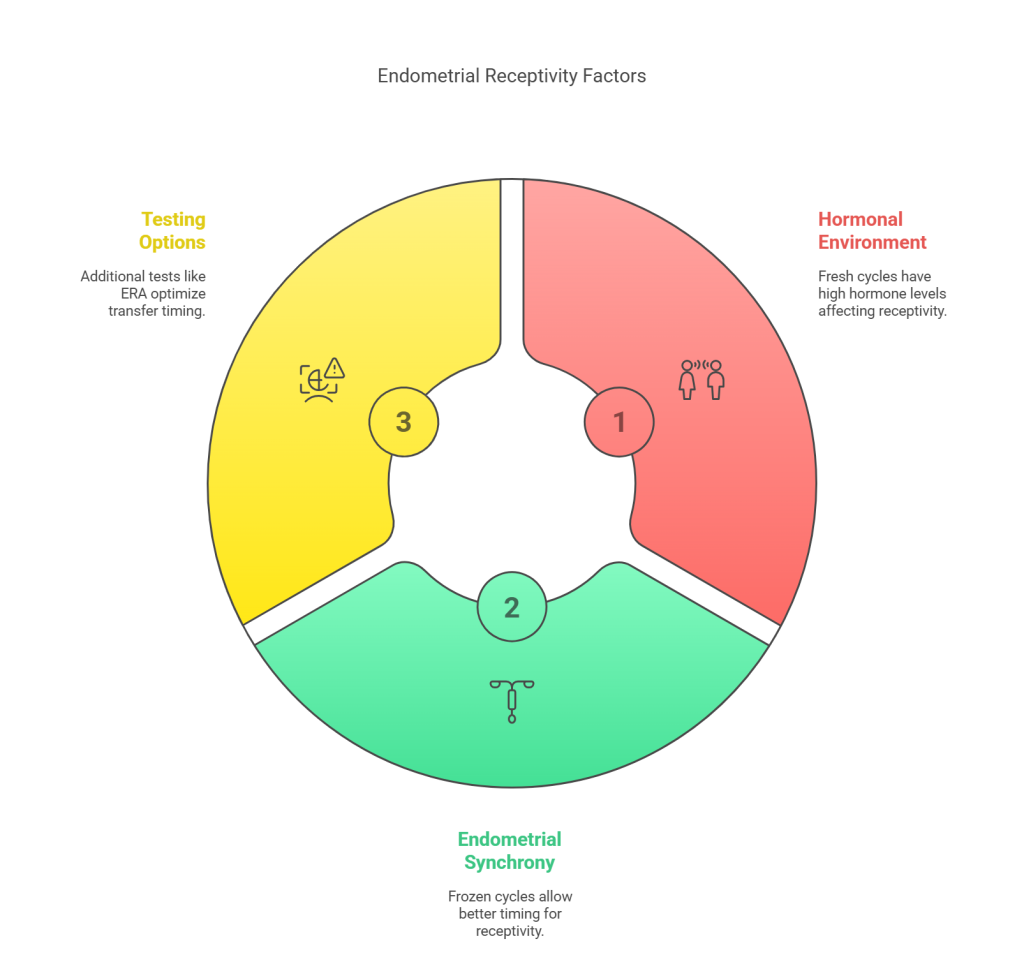
Hormonal Environment: During a fresh transfer cycle, the uterine lining develops under the influence of high hormone levels from ovarian stimulation. This can sometimes create a less-than-ideal environment for implantation. In contrast, frozen transfers allow for a more controlled hormonal environment that can be optimized for implantation.
Endometrial Synchrony: Frozen embryo transfers give fertility specialists the opportunity to ensure better synchronization between embryo development and endometrial receptivity (when the uterine lining is most receptive to an embryo). This improved timing can lead to higher implantation rates in some patients.
Testing Options: Frozen cycles enable additional testing that can improve timing, such as endometrial receptivity analysis (ERA). This test helps determine the optimal window for transfer by analyzing gene expression patterns in the endometrium.
Financial Considerations
The financial component of fertility treatment is a crucial consideration for many patients:
Cost Comparison: Fresh transfers may appear more cost-effective initially, since they eliminate the extra expenditures involved with embryo freezing, storage, and thawing. However, if a fresh transfer is unsuccessful, beginning a new stimulation cycle might be more costly than utilizing already-frozen embryos.
Long-term Family Planning: For couples wishing to have several children, producing and preserving numerous embryos during one stimulation session may be more cost-effective than going through multiple fresh cycles over time.
Patient-Centric Considerations
Choosing between fresh and frozen embryo transfers is not just a medical choice; personal preferences and individual circumstances play a key role:
Personal Preferences: Some patients may prefer fresh transfers to minimize the waiting time involved with freezing and thawing embryos. Others could decide on frozen transfers to enable their bodies to recuperate from ovarian stimulation or to better coordinate the embryo transfer with the appropriate uterine environment.
Medical History: Patients with particular disorders including endometriosis, polycystic ovarian syndrome (PCOS), or a history of implantation failure could benefit more from one technique over the other. Your fertility doctor can assist to assess which option could work best for your individual circumstances.
Lifestyle and Convenience: Frozen embryo transfers allow more flexibility in scheduling, which might be useful for individuals seeking time to address personal or medical difficulties before continuing with the transfer.
Making Your Decision
Deciding between fresh and frozen embryo transfers is a multidimensional choice that should be personalized to each patient’s individual medical history, age, and personal preferences.
At Lifespan Birth, we are devoted to offering specialized fertility treatment, supporting you through every stage of your IVF experience. Our complete reproductive services, including frozen embryo transfer, are intended to provide you with the greatest possible opportunity of obtaining a successful pregnancy.
For more complete information see our frozen embryo transfer services page.