How PGT-A Works
PGT-A uses advanced genetic technology to examine the chromosome number of embryos created through IVF and ICSI. This scientific process helps identify which embryos are most suitable for transfer.
PGT-A is performed after embryos reach the blastocyst stage. A small sample of cells is taken and analysed to determine whether each embryo has the correct number of chromosomes.
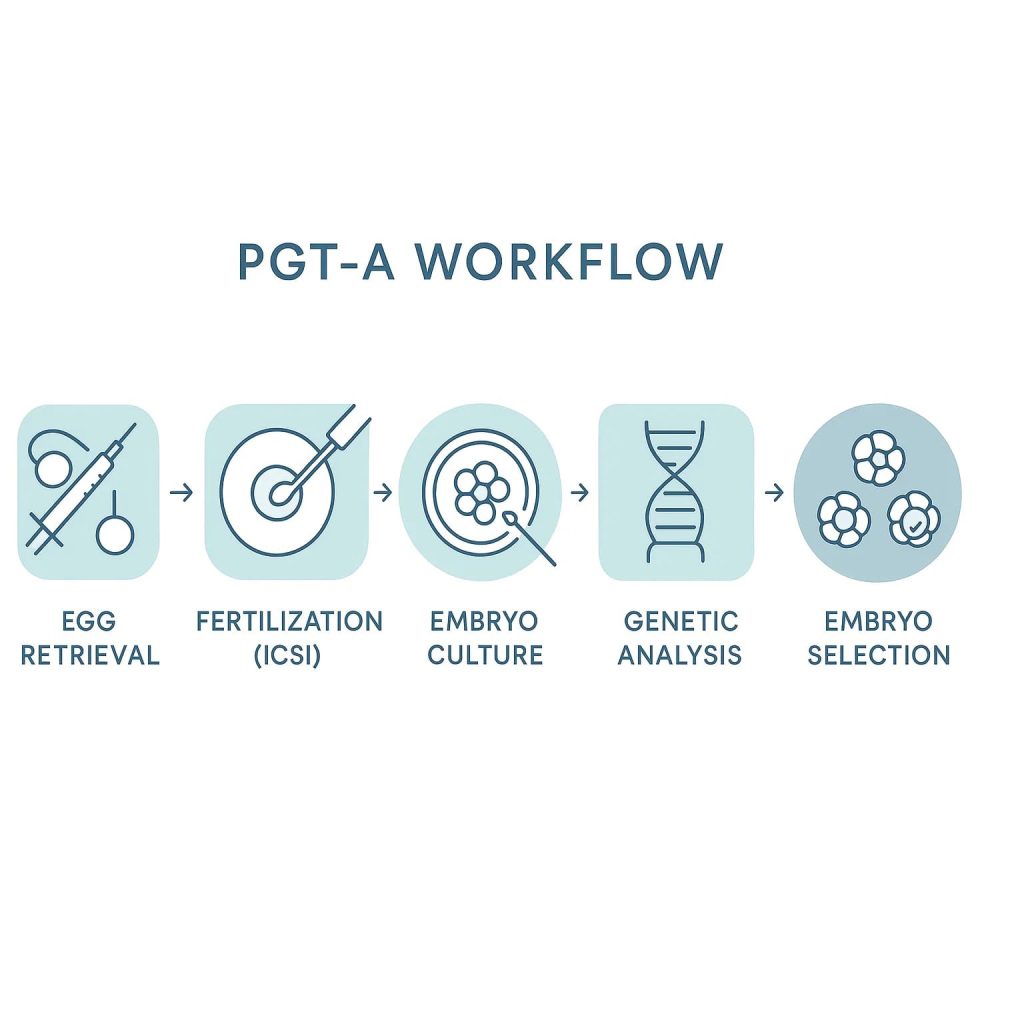
Step-by-Step PGT-A WORKFLOW

- Embryos are carefully cultured in the laboratory until Day 5–6, when they reach the blastocyst stage.
- Only a few cells from the trophectoderm (the layer that becomes the placenta) are sampled.
- No cells are taken from the inner cell mass, which develops into the fetus.
What the biopsy involves:
- A laser gently creates an opening in the outer layer of the embryo.
- Around 5–10 trophectoderm cells are removed for testing.
- The embryo is then frozen to preserve it while the analysis is completed.
The biopsied cells undergo several stages of analysis:
- DNA amplification to increase the amount of genetic material available
- Next-generation sequencing (NGS) to evaluate chromosome copy number
- Chromosome counting to identify whether the embryo is chromosomally normal
Embryos are classified according to their chromosome status:
- Euploid – normal chromosome number
- Aneuploid – missing or extra chromosomes
- Mosaic – a mixture of normal and abnormal cells
Your doctor reviews the results and recommends which embryo(s) are most suitable for transfer. Euploid embryos are generally prioritized. A frozen embryo transfer (FET) is then scheduled once the uterus is prepared.
Safety & Accuracy
Embryo biopsy is considered safe when performed at the blastocyst stage.
Testing accuracy depends on laboratory standards and the quality of the NGS platform used.
Mosaicism may affect interpretation and requires individualized clinical decision-making.
Why Choose LIFESPAN?
LIFESPAN is your trusted partner in infertility care, combining world-class medical expertise, the latest fertility technologies, and a welcoming, luxury environment.
Expertise with Assurance : Guided by the dedication of our experienced medical team and proven success rates, we deliver trusted care from the very first step — and share this confidence with you by providing a 2nd FET within the same cycle, when aligned with your individual care needs.
Comprehensive Care & Personalized Support : Our professional support team is ready to advise and guide you at every stage of your journey. We ensure a smooth experience with attention to every detail, including providing first-class accommodation and private transfers, and patient care service if desired.
Proven Success Rates : Our consistently high outcomes reflect not only advanced medical excellence but also the quality and dedication of our team. We are committed to giving you the best chance of success at every step of your fertility journey.
State-of-the-Art Facilities : Our advanced laboratories and modern comforts are designed to support you with precision and care at every stage.
FAQs About PGT-A
Typically, about 5–10 trophectoderm cells are removed from the outer layer of the embryo. These cells are not part of the inner cell mass, which forms the fetus.
When performed at the blastocyst stage by trained embryologists, the biopsy is considered safe and does not interfere with the embryo’s ability to continue developing.
Most laboratories use Next-Generation Sequencing (NGS) to evaluate chromosome copy number. This method provides a highly reliable assessment of aneuploidy.
Freezing allows time for the genetic analysis to be completed. It also ensures the embryo remains stable while results are reviewed and a transfer plan is made.
Related Services & Information
From planning to pregnancy and beyond, we’re with you every step of the way. Explore our services designed to support you throughout your fertility journey.