



Before choosing a fertility clinic, patients should ask about the doctor’s experience, diagnosis process, treatment options, success rates, costs, lab quality, communication, timelines and support. These questions can help you understand how the clinic makes recommendations and what your next steps may look like.
The “best” clinic is not always the one with the highest advertised success rate or the lowest package price. Fertility care involves medical, emotional, financial and practical decisions, so clear explanations matter. A good clinic should explain why a treatment is being recommended, what testing may be needed first and what outcomes are realistic for your situation.
If you are preparing for a first fertility consultation, it helps to bring a list of questions to ask fertility clinic teams before making a decision.
Questions to Ask a Fertility Clinic
- Ask how the clinic will diagnose your situation before recommending treatment.
- Ask which fertility treatments are available and why one option may suit you better than another.
- Ask how success rates are calculated and whether they apply to your age, diagnosis and treatment plan.
- Ask for a written cost breakdown, including medication, testing, lab procedures and storage.
- Ask about lab quality, embryo freezing, genetic testing and male fertility support if relevant.
- Ask how communication, follow-up and emotional support are handled throughout treatment.
Questions About Diagnosis and Your First Consultation
Good fertility care starts with diagnosis, not a one-size-fits-all package. Both female and male fertility factors may need assessment, especially when sperm health could affect treatment planning. A clear first consultation should help patients understand what is already known, what still needs testing and what the next step may be:
- What tests do you recommend before choosing a treatment?
- Will both partners be assessed where relevant?
- How do you review age, ovarian reserve, sperm health and medical history?
- Will I see a fertility specialist before starting treatment?
- How will you explain my diagnosis and treatment options?
- Will I receive a written treatment plan?
It can also help explain how fertility doctors assess male fertility and whether a semen analysis is recommended.

Questions About Treatment Options
- Which treatment options may be suitable for my situation?
- Do you offer IUI, IVF, ICSI, frozen embryo transfer or fertility preservation?
- Why do you recommend this treatment instead of another option?
- What would make you change the plan during treatment?
- Do you offer treatment for male factor infertility?
- Do you offer options such as PGT-A, NGS genetic screening or embryo freezing if needed?
Different patients need different treatment plans. A clinic should explain why it recommends IVF treatment, ICSI, frozen embryo transfer or another option based on the diagnosis. If genetic testing is discussed, the clinic should also explain when NGS genetic screening may be appropriate. Patients should understand the purpose of each treatment before agreeing to start.
Questions About Success Rates
Success rates can be shown in different ways, so it is important to ask what the numbers actually measure. A pregnancy rate is not the same as a live birth rate, and a rate per embryo transfer may look different from a rate per treatment cycle. Clinic-wide averages may also not reflect one patient’s age, diagnosis, egg quality, sperm factors or embryo quality. When reviewing IVF success rates, patients should look for context rather than a single headline number. A trustworthy clinic should explain both the potential benefits and the limitations clearly.
- How do you calculate your success rates?
- Are the rates based on pregnancy, live birth, embryo transfer or treatment cycle?
- Do you provide success rates by age group?
- Do your rates apply to patients with my diagnosis?
- How many patients are included in the data?
- How do you explain cases where treatment does not work?
Questions About Costs and What Is Included
Fertility treatment costs can vary depending on medication needs, lab procedures, add-ons and future storage or transfer. A clear written cost breakdown helps patients compare clinics more fairly, because the lowest package price may not be the lowest total cost. It is helpful to understand the true difference between costs and prices in IVF and ICSI packages before making a decision based on price alone.
- What is included in the quoted package price?
- What is not included?
- Are medications included?
- Are blood tests, ultrasounds, egg retrieval, embryo transfer and lab fees included?
- Are ICSI, embryo freezing, genetic testing or frozen embryo transfer charged separately?
- Are there storage fees for frozen eggs, sperm or embryos?
- What costs might come later if I need another cycle or transfer?
- Can I receive a written cost estimate before starting?
Questions About the Fertility Lab and Technology
- What fertility procedures are performed in your lab?
- How are eggs, sperm and embryos handled and identified?
- What freezing methods do you use for eggs or embryos?
- How do you monitor embryo development?
- Do you offer genetic screening such as PGT-A or NGS where appropriate?
- How do you protect frozen eggs, sperm or embryos in storage?
- Who can explain lab results to me in plain English?
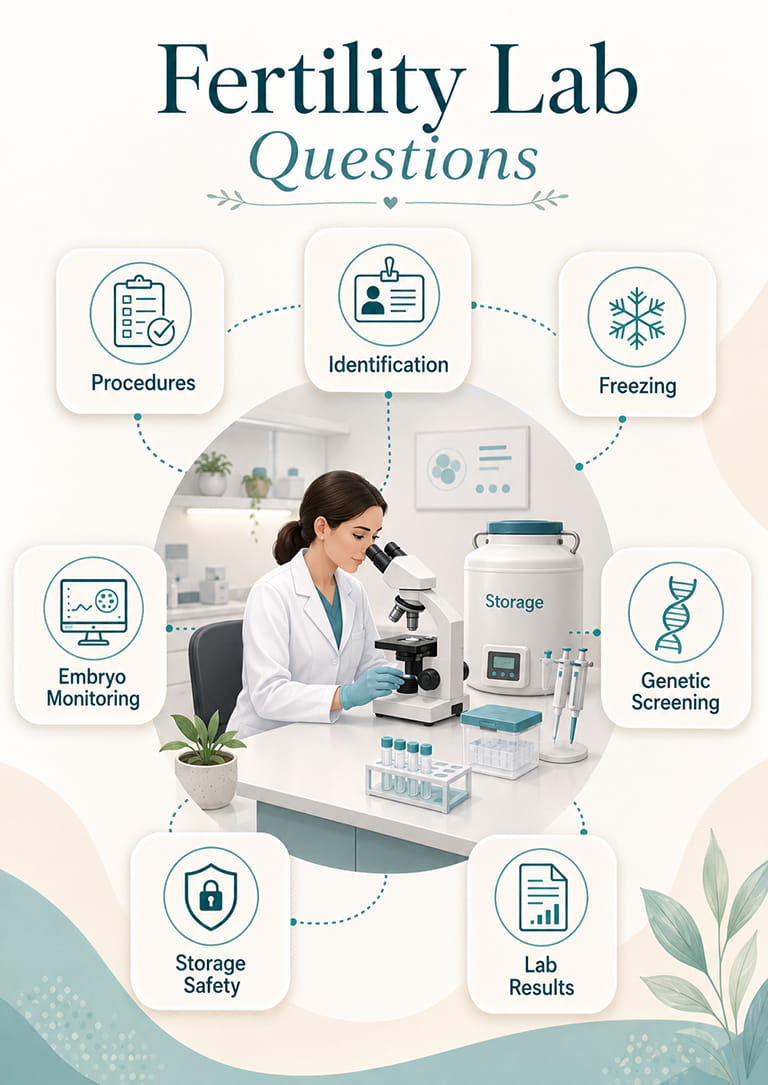
The fertility lab plays an important role in egg handling, sperm preparation, fertilization, embryo development, freezing and storage. These steps can affect treatment planning and may also influence outcomes such as embryo transfer success rates.
Questions About Doctors, Team Experience and Patient Support
- Who will be my main fertility doctor?
- Who will explain my test results and treatment plan?
- How experienced is the team with cases like mine?
- Will I see the same doctor throughout treatment?
- Who should I contact if I have concerns during medication or after a procedure?
- Is counseling or emotional support available?
- How does the clinic support patients after an unsuccessful cycle?
Fertility care often involves doctors, nurses, embryologists and coordinators. Patients should know who is responsible for each part of care, from reviewing test results to explaining lab updates and follow-up steps. Asking to meet the clinic’s team can help you understand who may be involved and how care is organized. Support also matters because fertility treatment can be physically and emotionally demanding, especially during medication, waiting periods or after an unsuccessful cycle.
Choosing a Clinic With Confidence
Success rates, technology and costs all need context when choosing a fertility clinic, and each patient’s situation may require a different approach.
It can help to compare clinics based on clarity, experience, communication, transparency and individualized care. Patients should feel able to ask questions before committing to treatment, especially about diagnosis, costs, lab processes and follow-up.
Lifespan Birth supports patients with clear information and practical guidance, so fertility decisions can feel more informed, realistic and manageable.