


A common belief is that when IVF becomes necessary, natural conception is no longer achievable. It frequently appears as a pivotal moment, where supportive therapy is the sole way ahead. This is why it can be surprising when certain couples become pregnant naturally following IVF, sometimes when they are least expecting it.
The truth is more complex. Indeed, it is possible to conceive naturally after IVF in certain situations. IVF does not inhibit or substitute your body’s inherent ability to conceive. Nonetheless, it also does not assure that natural conception will occur afterward. The possibility hinges on the initial fertility assessment, general reproductive well-being, and how those elements might have evolved over time.
In this article, we examine research on natural pregnancies following IVF, including their frequency and the reasons behind them. You will also discover who is more likely to be affected, what factors influence the likelihood, and what practical measures to think about if you are considering conceiving naturally after treatment.
Key Summary
- Some couples do get pregnant naturally after IVF, although it is not guaranteed
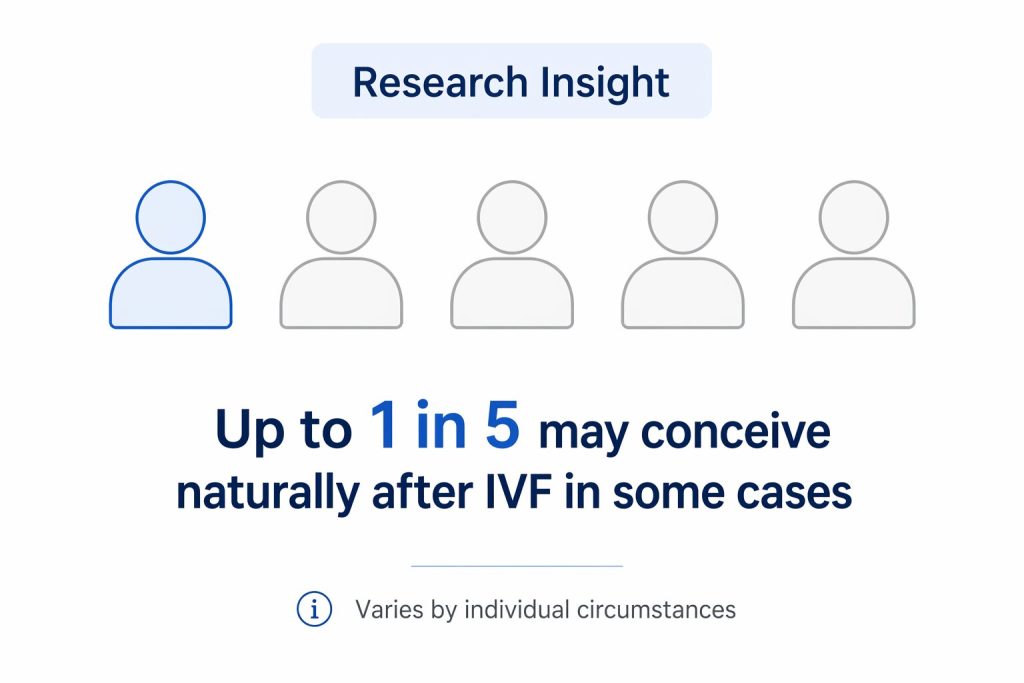
- Research suggests that up to 1 in 5 women may conceive naturally after having a baby through fertility treatment, depending on individual circumstances
- Natural pregnancy after IVF is more likely in cases of unexplained or mild infertility
- IVF does not prevent natural conception from happening later
- Individual factors such as diagnosis, health, and reproductive changes over time play the biggest role
Can You Get Pregnant Naturally After IVF?
Yes, there are instances where one can conceive naturally after undergoing IVF. IVF does not take over or disable your body’s inherent capacity to conceive. It is a medical process that aids in fertilization and the growth of embryos, yet it does not stop natural pregnancy from occurring subsequently.
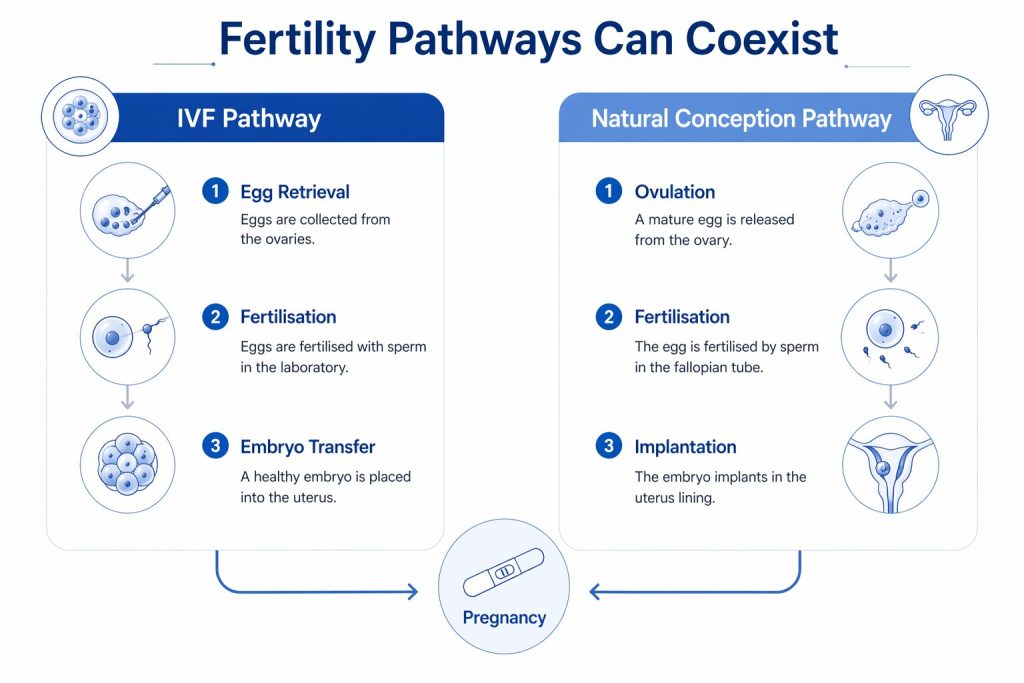
To understand the reason, it’s useful to examine what IVF truly achieves. IVF, or in vitro fertilization, consists of collecting eggs, fertilizing them externally, and implanting an embryo into the uterus. A straightforward explanation of the IVF process is also important to understand. The approach aims to address particular fertility challenges, rather than serve as a permanent substitute for natural conception.
In practical terms, achieving a natural pregnancy following IVF generally relies on the initial reason for seeking treatment. Certain conditions are established or continuous, whereas others are transient or ambiguous. Here is where the difference becomes significant:
- If infertility was unexplained or mild, natural conception may still be possible later
- If the issue was severe or structural, such as blocked fallopian tubes, natural pregnancy may remain unlikely
- If circumstances have changed, such as improved health or hormonal balance, fertility may also change
There are instances where fertilization itself posed the key challenge. In such cases, methods like ICSI, which involves directly injecting sperm into the egg, can facilitate pregnancy during the process.
Why Natural Pregnancy Can Happen After IVF
Natural pregnancy after IVF can happen because fertility is not always fixed or permanent. In many cases, the reasons that led to IVF may change over time, improve, or turn out to be less absolute than first thought.
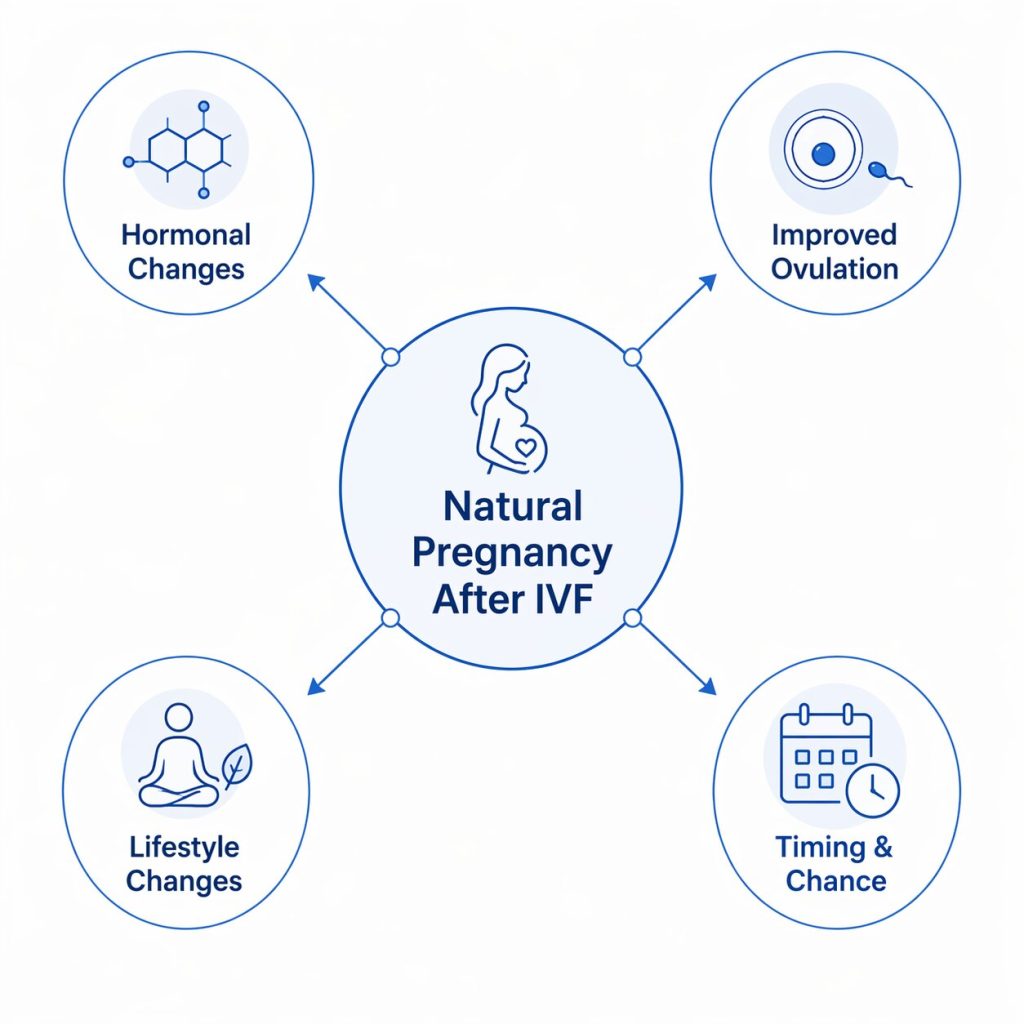
A straightforward explanation is that certain fertility issues are temporary or fluctuate. Hormonal patterns may change, ovulation can become increasingly consistent, and lifestyle aspects like stress, weight, or overall health could enhance. Even minor adjustments can affect the likelihood of natural conception.
A crucial element is diagnosis. Not every case of infertility has a specific, obvious reason. Actually, numerous individuals who go through IVF are categorized as experiencing “unexplained infertility.” This indicates that although pregnancy did not occur naturally in the past, there was no verified obstacle inhibiting it. In such situations, conceiving naturally after IVF is more biologically feasible.
Treatment itself can also provide insight into what is possible. During IVF or related procedures, specialists can observe how eggs, sperm, and embryos behave. For example:
- Eggs may fertilize normally
- Embryos may develop well
- The uterus may support implantation
There is also a real-world element that should not be overlooked: timing and chance. Fertility is not perfectly predictable. Some couples may conceive naturally after IVF simply because conditions align differently in a later cycle.
Who Is More Likely to Conceive Naturally After IVF?
Natural pregnancy after IVF is more likely in certain situations, especially when there was no permanent barrier to conception in the first place. In practical terms, people who may have a higher chance of natural pregnancy after IVF include:
| Situation | Why |
| Unexplained infertility | No clear structural or biological barrier was identified, so natural conception may still be possible |
| Mild male factor infertility | Sperm quality can fluctuate, and natural fertilization may occur in some cycles |
| Ovulation-related issues that improve | Hormonal patterns can stabilise over time or after treatment |
| Previous successful IVF pregnancy | Shows that pregnancy and implantation are biologically possible |
| Lifestyle or health improvements | Changes in weight, stress, sleep, or overall health can influence fertility |
It is important to keep expectations grounded. These factors do not guarantee natural pregnancy after IVF. They simply make it more biologically plausible.
Possibility Exists, But Clarity Matters More
Natural pregnancy after IVF is possible, and research suggests it happens more often than many people assume. At the same time, it is not something that can be predicted with certainty. The outcome depends on the underlying fertility factors, how they may have changed over time, and whether there are still barriers to natural conception.
If there is uncertainty, a professional review can bring clarity. At Lifespan Birth, we support patients with evidence-based guidance, helping them understand what is realistically possible and what steps make sense next.
What This Means for You Moving Forward With IVF
- You can get pregnant naturally after IVF, but it is not guaranteed
- Research suggests natural pregnancy after IVF happens more often than expected in some groups
- Certain fertility conditions make spontaneous pregnancy more or less likely
- IVF does not prevent natural conception from happening later
- Your individual diagnosis and health profile are the most important factors
- A personalised fertility assessment helps guide the best next step