



Yes, lifestyle changes may help support sperm quality for some men, especially when habits such as smoking, poor diet, excess alcohol, poor sleep, ongoing stress, obesity or frequent heat exposure are affecting fertility. However, lifestyle changes do not guarantee pregnancy and may not correct every cause of male infertility.
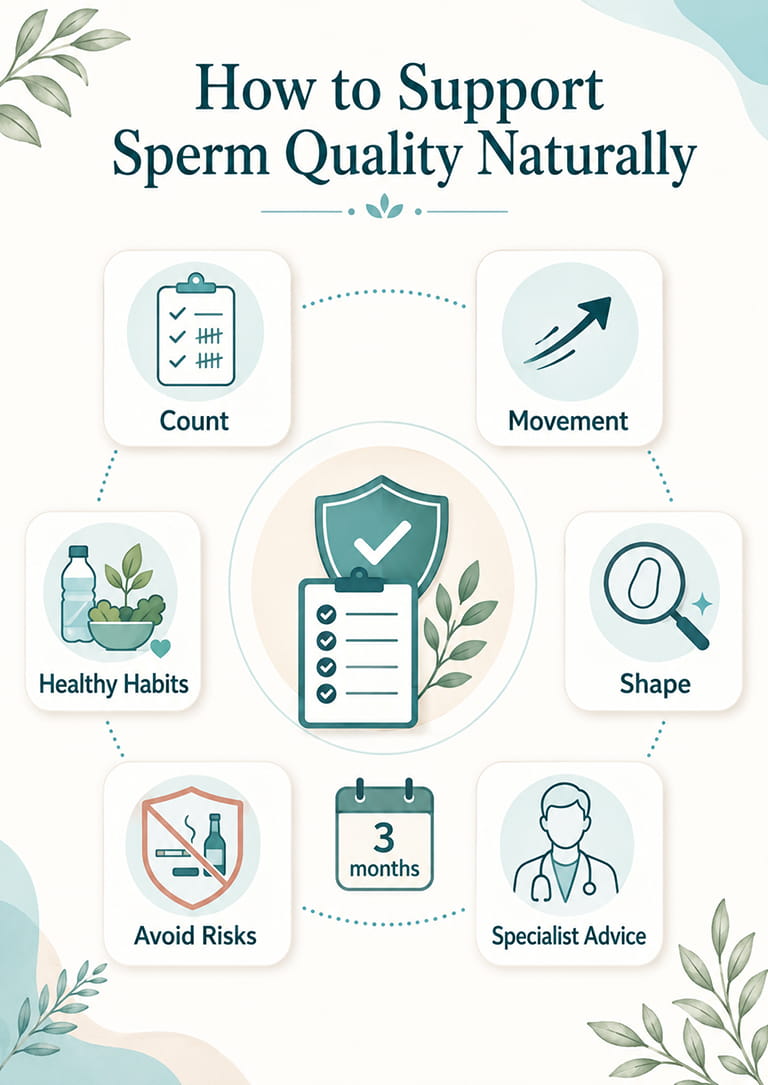
Sperm quality usually refers to sperm count, movement and shape. These are commonly checked through a semen analysis, which helps show whether sperm health may be affecting a couple’s chances of conceiving.
For men wondering how to improve sperm quality naturally, the best first step is to focus on realistic, consistent habits rather than extreme routines. Sperm also takes time to develop, so any changes may need several months before they appear in test results.
How to Improve Sperm Quality Naturally
- Lifestyle changes may support sperm quality, but they cannot guarantee pregnancy.
- Sperm quality usually includes sperm count, movement and shape.
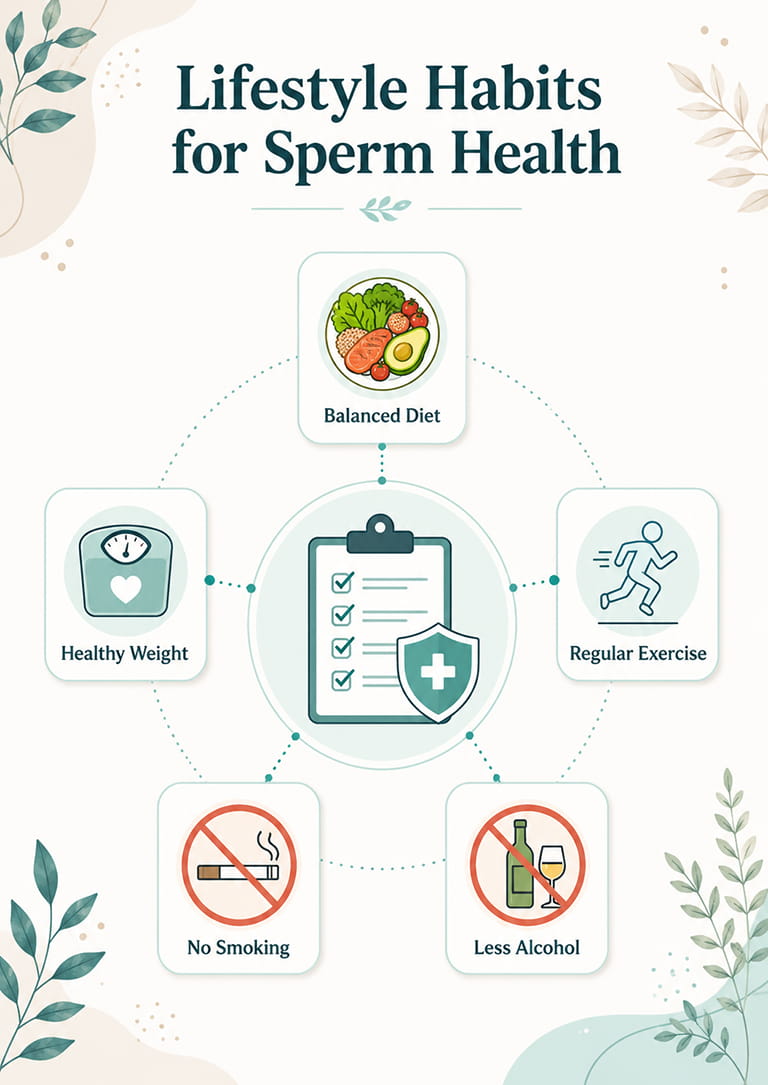
- Healthy weight, balanced nutrition, regular exercise, better sleep and avoiding smoking may help support male fertility.
- Frequent heat exposure, heavy alcohol use, anabolic steroids and recreational drugs may affect sperm production.
- Sperm development takes time, so changes may need around three months to show in a semen analysis.
- Men with abnormal semen results or long-term difficulty conceiving should speak with a fertility specialist.
How is “Sperm Quality” Assessed?
Sperm quality is usually assessed through a semen analysis, which looks at several parts of sperm and semen health together. These may include sperm count or concentration, which shows how many sperm are present; motility, which means how well sperm move; and morphology, which means sperm shape. A semen analysis may also check semen volume and the overall quality of the sample.
These results can help explain whether sperm factors may be affecting the chance of pregnancy. However, one weaker result does not always mean pregnancy is impossible. Semen results can vary from one test to another, and sperm count, movement and shape need to be considered together.
This is why results should be reviewed with a fertility specialist, especially if more than one result is abnormal or if a couple has been trying to conceive for some time. A specialist can explain how fertility doctors assess male fertility and whether further testing may be needed.
Can Lifestyle Changes Really Improve Sperm Quality?
Lifestyle changes may be most helpful when daily habits are contributing to poorer sperm results. For example, changes that support general health may also support sperm count, movement or shape over time. However, improvements are not immediate because sperm production takes time.
According to research on lifestyle changes and male fertility, lifestyle factors may be linked with semen quality, but results can vary from person to person. These changes may improve semen parameters in some men, but they do not guarantee natural conception, IVF success or ICSI success.
Medical causes such as varicocele, hormone problems, blockages, infections or genetic factors may still need diagnosis and treatment from a fertility specialist.
Lifestyle Changes That May Support Sperm Quality
Eat a Balanced, Nutrient-Rich Diet
A balanced diet may support sperm health by supporting general health, hormone balance and sperm development. Focus on vegetables, fruits, whole grains, lean protein, nuts, seeds and healthy fats. Try to reduce heavily processed foods, excess sugar and frequent fried foods where possible. No single diet can guarantee better fertility, but steady, nutritious eating habits can help create a healthier foundation for sperm production.
Reach and Maintain a Healthy Weight
Being significantly overweight may affect hormone balance, sperm count and sperm movement. The goal is not rapid weight loss or a strict routine. Gradual, realistic changes are usually easier to maintain and better for overall health. Men with obesity, metabolic concerns, diabetes risk or sudden weight changes should ask a doctor for guidance before starting a major diet or exercise plan.
Exercise Regularly, But Avoid Extremes
Regular moderate exercise may support hormone health, circulation and weight management. Helpful options can include walking, swimming, strength training or simply building more consistent movement into the week. However, extreme training, overtraining and anabolic steroid use may harm sperm production. A balanced routine is usually better than pushing the body too hard.
Stop Smoking and Avoid Vaping or Recreational Drugs
Smoking is linked with poorer semen quality, and vaping may expose the body to substances that are not ideal for reproductive health. Recreational drugs and anabolic steroids may also affect sperm production and hormones. Quitting can be difficult, so medical support, counseling or a structured stop-smoking program may help.
Limit Alcohol
Heavy alcohol use may affect hormone balance and sperm quality. For many men, the most realistic goal is moderation rather than perfection. Reducing frequent or heavy drinking may support overall health while also removing one possible factor that can affect sperm production.
Heat, Sleep and Stress: Often Overlooked Fertility Factors
Reduce Heat Around the Testicles
Sperm production works best when the testicles are not exposed to frequent high heat. This does not mean heat is the only reason for sperm problems, but it can be one factor to consider. Practical steps may include avoiding frequent hot tubs, saunas and placing a laptop directly on the lap for long periods.
Prioritize Sleep
Poor sleep may affect hormones, energy, stress levels and general reproductive health. A realistic goal is to build more consistent sleep habits where possible. This may include keeping a steadier bedtime, reducing late-night screen time or creating a calmer routine before bed.
Manage Stress Without Blaming Yourself
Stress can affect sleep, sex, hormones and daily health habits, so managing it may support fertility indirectly. Helpful steps may include walking, counseling, breathing exercises, lower alcohol use or a more predictable routine. However, stress alone is not usually the full explanation for infertility, and needing support does not mean anyone has caused the problem.
How to Improve Sperm Quality Naturally
- Lifestyle changes can support sperm health, but they cannot guarantee pregnancy.
- Sperm quality usually means sperm count, movement and shape.
- Balanced nutrition, regular exercise, healthy weight, good sleep, less heat exposure and avoiding smoking may support sperm health.
- Heavy alcohol use, anabolic steroids, recreational drugs and frequent heat exposure may harm sperm production.
- Sperm takes time to develop, so changes may need around three months before results change.
- A semen analysis and fertility review are important if conception is taking longer than expected.
Building Better Sperm Health Starts With Clear Information
Lifestyle changes can be helpful because they support overall reproductive health, not because they guarantee fertility. Small, consistent steps are often more realistic than extreme routines, unverified supplements or fertility hacks.
A semen analysis gives clearer direction and can help men avoid guessing about sperm count, movement and shape. If conception is taking longer than expected or semen results are abnormal, specialist guidance can help explain what may be happening and what options may be appropriate.
For clear fertility information and patient-centered support, Lifespan Birth can help couples take the next step with more confidence and less uncertainty.