


When an IVF cycle doesn’t work, especially after transferring what appeared to be a healthy embryo, the experience can feel confusing and deeply discouraging. Many couples naturally wonder what went wrong or what they could have done differently. The truth is that even strong-looking embryos depend on a wide range of biological and timing-related factors to implant successfully, and some of these processes are far more complex than they appear on the surface.
In this article, we take a closer look at the reasons an IVF cycle can fail despite transferring good-quality embryos. We explore how the uterus, hormones, immune system, embryo development, and the timing of implantation all play a part. Our goal is to offer clarity and reassurance so you can better understand what may have happened and what steps could support a more successful outcome moving forward.
Understanding What “Healthy Embryos” Really Means
The Limits of Embryo Grading
Embryo grading is helpful, but it only evaluates how embryos look under the microscope. A beautifully formed embryo might receive a top grade because its cells appear balanced and well-organized. Still, grading can’t reveal what’s happening on the inside at the genetic level. That’s why even high-grade embryos sometimes fail to implant.
Grading gives an estimate of potential, not a promise. Many couples need this reminder after a failed transfer, because it’s easy to assume that a “perfect” grade should lead to a successful cycle.
Chromosomal Normality and PGT-A Insights
A major factor in embryo success is whether it has a healthy set of chromosomes. Embryos that look strong but have chromosomal issues often stop developing after transfer. Testing with PGT-A can provide more information, but even this has limitations.
For example:
- PGT-A doesn’t guarantee implantation.
- Mosaic embryos can still lead to healthy pregnancies.
- Normal results don’t rule out other issues such as timing or uterine factors.
Overview of the IVF Process and Key Stages
Healthy embryos go through several developmental milestones before transfer. Each stage depends on precise timing, stable hormone levels, and close monitoring. If you want a refresher on how the full process works, it may help to explore what IVF involves, and how the IVF process flows step by step. Understanding these foundations often makes it easier to make sense of all the factors that influence implantation.

The Role of the Uterus and Endometrial Environment
Endometrial Thickness and Receptivity
Even with a strong embryo, implantation depends heavily on whether the uterine lining is ready to receive it. A lining that’s too thin, too thick, or not developing in the right pattern may reduce the chances of implantation. Specialists usually look for a trilaminar (triple-line) appearance and an appropriate thickness. But it isn’t only about the number of millimeters. Blood flow, hormonal timing, and the overall health of the lining all help determine how “receptive” it is.
Some cycles look perfect on paper yet still don’t implant because the lining didn’t respond exactly as expected. This is one of the most common reasons a transfer with good embryos doesn’t lead to pregnancy.
Window of Implantation Timing
There’s a short window each cycle when the uterus is most receptive. For many people, this window aligns predictably with progesterone exposure. For others, it shifts slightly earlier or later. Even a small mismatch can cause an embryo to fail to attach, despite being healthy.
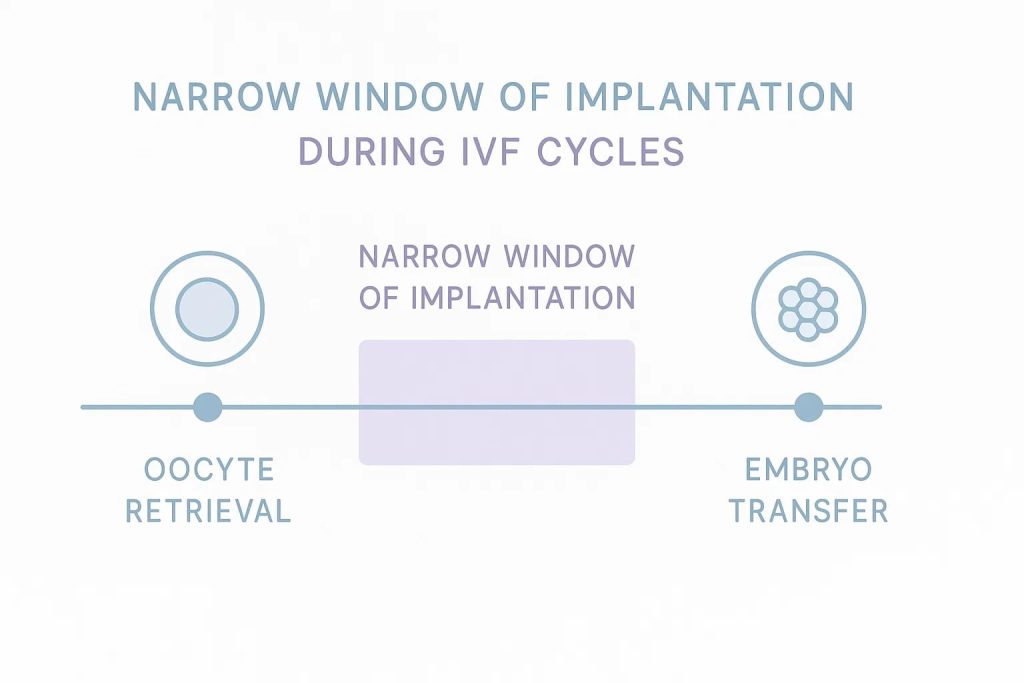
If timing is suspected as a factor, some patients explore more targeted testing. You might find it helpful to read more about how long the window of implantation lasts in IVF, since understanding this window gives valuable context.
Uterine Conditions and Structural Factors
The uterus itself can also influence outcomes. Some conditions create physical or inflammatory barriers to implantation. These can include:
- Fibroids that distort the cavity.
- Uterine polyps that interfere with embryo attachment.
- Scar tissue from previous surgeries or infections.
- Adenomyosis, which affects the uterine muscle and surrounding tissue.
Immunological, Hormonal, and Biological Factors
Hormone Levels and Cycle Synchronization
Hormone balance plays a central role in preparing the uterus for implantation. Progesterone, in particular, needs to rise at the right moment and stay within an optimal range. If it increases too early or fluctuates unexpectedly, the lining may become out of sync with the embryo. Even strong embryos may struggle to implant when the cycle isn’t perfectly aligned.
Immune System Complexity
Some people worry that an “overactive” immune system may attack an embryo, but the reality is more nuanced. Researchers are still learning how the immune system interacts with implantation. Certain immune-related factors may interfere with embryo attachment, while others support it. The challenge is that tests and treatments in this area are still evolving.
This means:
- Some immune tests lack strong scientific consensus.
- Treatment protocols vary widely between clinics.
- Immune-related issues are usually considered only after other causes have been ruled out.
Blood Flow and Uterine Environment
Healthy blood flow to the uterus helps create the right environment for an embryo to anchor and grow. Chronic inflammation, clotting disorders, or vascular issues may influence this process. While these factors aren’t common causes of failed transfers, they can affect how well the lining develops and how stable it remains during implantation.
Embryo Transfer-Related Factors
Timing and Stage of Embryo Transfer
Even with healthy embryos, choosing the right day for transfer matters. Some patients do better with a day-5 blastocyst transfer, while others may respond well to a day-3 transfer depending on how embryos develop in the lab. Blastocysts usually have higher implantation potential, but they also require more precise timing with the endometrium’s readiness. A mismatch between embryo stage and uterine receptivity can cause a cycle to fail, even when the embryo looks ideal.
Embryo Transfer Technique
The actual transfer procedure is quick, but the technique behind it is delicate. A smooth, gentle catheter placement helps avoid irritation or uterine contractions during the transfer. Although rare, difficulties such as cervical tightness, unexpected uterine curvature, or stimulation-related tenderness can influence how the embryo is positioned. The lab-to-uterus transition also matters. Handling, temperature, and timing all need to remain consistent from the moment the embryo leaves the incubator.
These details are mostly outside a patient’s awareness, yet they contribute to the overall success of a cycle.
Success Rates and What They Tell Us
Success rates are often reassuring, but they are not absolute predictors. They reflect averages across large groups of patients with varying health backgrounds. A healthy embryo still has a chance of not implanting simply because biology isn’t always predictable.
For more context, you can explore embryo transfer success rates, which helps clarify what influences these numbers and why they vary from clinic to clinic.
Lifestyle and Health Factors That May Influence IVF Outcomes
Factors That Can Reduce Implantation Success
Even when embryos are healthy and the transfer goes smoothly, certain lifestyle or health factors can quietly affect implantation. Stress doesn’t directly stop an embryo from attaching, but chronic stress can influence hormones that support early pregnancy. Sleep disruption, smoking, or high alcohol intake may also interfere with the body’s balance during an IVF cycle. Thyroid conditions, insulin resistance, and vitamin deficiencies can all play a part as well.
What Patients Can Do to Support Future Cycles
The good news is that many supportive changes are simple and manageable. Some people focus on improving sleep routines or cutting back on stimulants and alcohol. Others work with their doctor to address thyroid health, blood sugar regulation, or inflammation. Gentle exercise, balanced meals, and consistent rest often provide a stronger foundation for treatment.
Moving Forward With Clarity and Hope
A failed IVF cycle with healthy embryos can feel disheartening, but it doesn’t mean something went wrong on your part or that future success is out of reach. Implantation depends on a delicate combination of factors, including uterine readiness, hormonal balance, immune activity, timing, and the many small biological processes that doctors continue to study. Understanding these pieces can make the experience feel less mysterious and help you approach the next step with more confidence.
If you’re trying to understand what may have happened in your cycle, or you want to review your options with someone who can guide you through the details, at Lifespan Birth we offer clear and compassionate support. Many patients succeed after adjusting their protocol, exploring additional testing, or simply allowing more time for the body to align with treatment.