


Advancements in reproductive medicine have consistently revolutionized the landscape of fertility treatments, bringing hope and answers to many individuals and couples. One such significant achievement is Next-Generation Sequencing (NGS), a technology that is transforming embryo screening. At Lifespan Birth, we are dedicated to incorporating such advances to optimize patient outcomes.
Understanding NGS in Embryo Screening
NGS is a cutting-edge DNA sequencing technology that allows for comprehensive analysis of an embryo’s genetic makeup. Unlike earlier methods, NGS can simultaneously detect chromosomal abnormalities (aneuploidies) and single-gene disorders with high precision. This dual capability offers a more detailed genetic profile of embryos, aiding in the selection of the healthiest ones for transfer.
When we examine embryos with NGS, we’re essentially reading through their entire genetic story. The technology rapidly sequences DNA fragments, creating millions of reads that our specialists then piece together to form a complete picture of chromosomal structure and genetic variants.

Source: Biorender
Advantages of NGS Over Traditional Methods
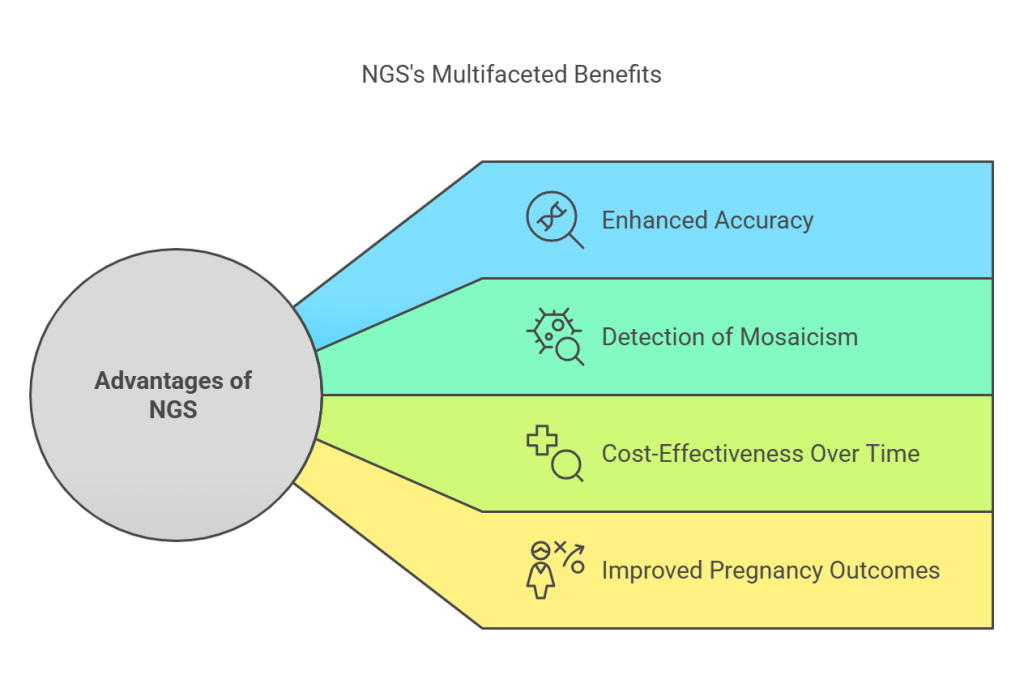
Enhanced Accuracy: Traditional methods like fluorescent in situ hybridization (FISH) evaluate a restricted number of chromosomes, possibly missing abnormalities. NGS, however, evaluates all 24 chromosomes, offering a fuller picture. This thoroughness leads to more trustworthy diagnoses, resulting in greater pregnancy rates and reduced miscarriage rates.
Detection of Mosaicism: Mosaic embryos include both normal and abnormal cells, adding complications in embryo selection. NGS has proven more effective in detecting mosaicism compared to single-nucleotide polymorphism (SNP) array analysis, hence improving pregnancy outcomes. SNP array analysis is a genetic testing method that examines many specific points in a person’s DNA to identify variations known as SNPs. Mosaicism diagnosis is crucial because some mosaic embryos may mature into healthy children, providing patients with additional viable alternatives.
Cost-Effectiveness: Despite its sophisticated capabilities, NGS has become more affordable over time. Its capacity to concurrently test for aneuploidy (the condition of having an abnormal number of chromosomes) and monogenic disorders (caused by mutations in a single gene) may eliminate the need for several testing, delivering a cost-effective alternative for complete embryo screening.
Improved Pregnancy Outcomes: Studies have demonstrated that NGS-based preimplantation genetic testing considerably improved pregnancy outcomes, especially in women of advanced maternal age. By choosing embryos with the right number of chromosomes, the odds of successful implantation and healthy pregnancy rise.
The Technical Advantage of NGS
NGS gives unprecedented resolution when studying genomic material. The sequencing depth (how many times each DNA segment is read) provides confidence in finding even tiny genetic differences. This becomes critical for discriminating between viable and non-viable embryos.
Additionally, NGS needs minimal DNA input, which matters greatly when dealing with the restricted genetic material available from an embryo biopsy. The technique has evolved to deliver valid findings from as little as 5-10 cells, limiting any potential harm to the developing embryo.
How NGS is Shaping the Future of Embryo Screening
The integration of NGS into preimplantation genetic testing represents a significant leap forward in assisted reproductive technology (ART). Its ability to provide comprehensive genetic insights not only improves IVF success rates but also reduces the incidence of genetic disorders. This advancement alleviates the emotional and financial burdens associated with failed pregnancies and genetic diseases.
Moreover, the continuous evolution of NGS technology promises even greater accuracy and efficiency in embryo screening, solidifying its role as the future standard in reproductive medicine.
Recent developments include machine learning algorithms that help interpret NGS results with greater precision. These computational approaches identify patterns in the data that might escape human analysis, further refining our ability to select viable embryos.
Real-World Impact of NGS
Couples with hereditary conditions have achieved transformational benefits with NGS screening. In families carrying genes for conditions like cystic fibrosis or Tay-Sachs disease, NGS allows for the selection of embryos free from these particular genetic abnormalities, halting the cycle of hereditary disease.
Furthermore, NGS has decreased the incidence of chromosomal abnormalities in IVF pregnancies. Clinics employing complete NGS screening report miscarriage rates reducing by 30-40% compared to traditional techniques.
Ethical Considerations of NGS
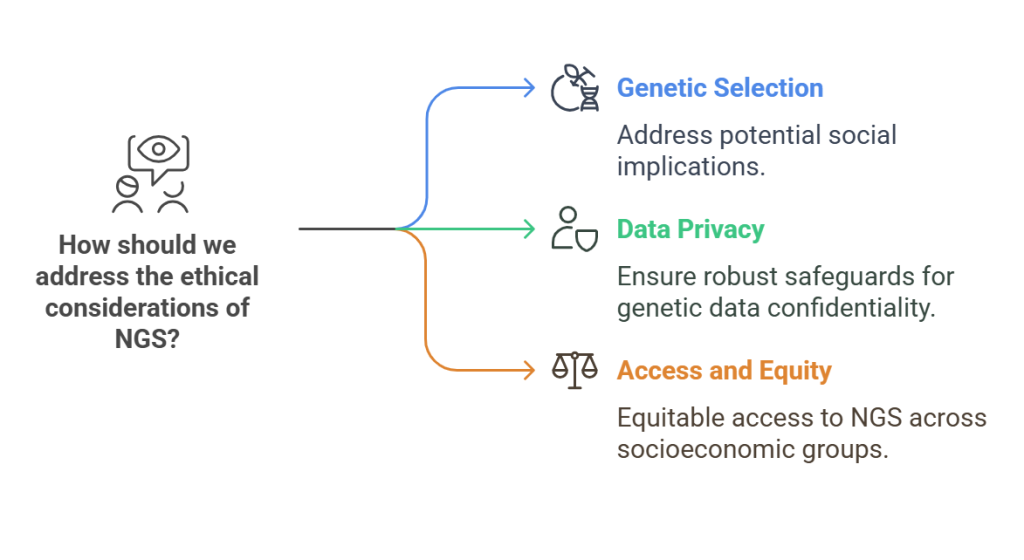
While NGS brings great advantages, it also poses ethical problems that require serious attention:
Genetic Selection: The capacity to screen for a broad variety of genetic features offers the possibility of choosing embryos based on desired attributes, beyond avoiding genetic abnormalities. This prospect raises concerns about “designer babies” and the social ramifications of such decisions.
Data Privacy: The vast genetic information collected by NGS demands stringent safeguards to preserve the privacy and confidentiality of people. Ensuring that genetic data is safely handled and utilized responsibly is crucial.
Access and Equity: As with many new medical technologies, achieving equitable access to NGS across various socioeconomic groups remains challenging.
Looking Forward
NGS technology continues to evolve rapidly. Researchers are exploring techniques to undertake non-invasive embryo screening, potentially removing the need for embryo biopsy completely by examining DNA released into culture medium (a liquid or gel designed to support the growth of microorganisms or cells). This would further limit risks to embryo development while retaining diagnostic accuracy.
Next-Generation Sequencing is changing embryo screening by delivering unmatched precision, speed, and cost-effectiveness. At Lifespan Birth, we are devoted to implementing such cutting-edge technology to provide our patients with the best possible care on their road to parenthood. To learn more about our NGS services, visit our Next-Generation Sequencing service page.