


At Lifespan, we’re devoted to integrating new reproductive technologies to support individuals and couples on their road to becoming a parent. Two essential procedures in assisted reproduction are Intracytoplasmic Sperm Injection (ICSI) and Next-Generation Sequencing (NGS). When combined, they considerably boost the likelihood of successful pregnancies.
Understanding ICSI and NGS
ICSI: This treatment involves injecting a single sperm directly into an egg to induce conception. It’s especially effective in situations of male infertility or when earlier fertilization procedures have been unsuccessful. By ensuring that the egg is fertilized by a chosen sperm, ICSI boosts the odds of creating viable embryos.
NGS: Standing for Next-Generation Sequencing, NGS is a cutting-edge genetic testing approach. It enables for a detailed examination of an embryo’s DNA, finding chromosomal abnormalities (aneuploidies) and genetic alterations. This deep knowledge assists in choosing embryos with the best chance for healthy growth.

The Synergy of ICSI and NGS in Assisted Reproduction
Combining ICSI and NGS offers several advantages:
Enhanced Embryo Selection: ICSI assures fertilization by picking a viable sperm, while NGS offers a thorough genetic profile of the resulting embryos. This combination assists in finding embryos with the right number of chromosomes, improving the probability of a healthy pregnancy.
Reduced Mosaicism Rates: Mosaic embryos include both normal and defective cells, which might complicate embryo selection. Studies show that employing ICSI may lead to decreased rates of mosaicism compared to traditional insemination procedures, resulting in superior embryo selection when paired with NGS.
Improved Outcomes for Specific Conditions: In situations like nonmosaic Klinefelter’s syndrome (a genetic condition where a male individual has an extra X chromosome (XXY) in every cell of their body, rather than just some), merging ICSI with NGS-based preimplantation genetic testing (PGT) has demonstrated positive clinical outcomes, bringing hope to couples facing such obstacles.
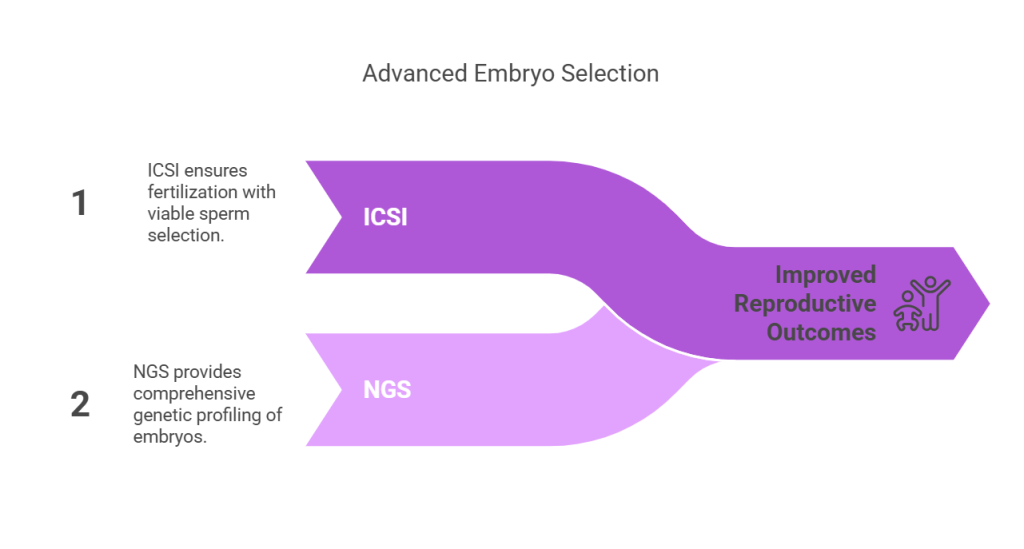
NGS plays a pivotal role in improving the chances of a successful pregnancy by enabling the selection of euploid embryos, which possess the highest potential for implantation and healthy development. Simultaneously, ICSI addresses potential fertilization challenges, particularly those associated with male infertility, ensuring that there are embryos available to undergo the rigorous genetic screening provided by NGS.
By integrating these two powerful techniques, fertility specialists can select embryos that have not only been successfully fertilized but also have the correct chromosomal makeup, thereby significantly increasing the likelihood of achieving a healthy and successful pregnancy. This dual approach offers a more targeted and effective strategy for overcoming infertility and improving patient outcomes.
Considerations and Ethical Aspects
While the combination of ICSI and NGS brings outstanding advantages, it’s vital to examine potential risks and ethical implications:
Genetic Counseling: Comprehensive genetic counseling is necessary before performing ART treatments. It ensures that patients are well-informed about the processes, prospective results, and any related risks allowing them to make choices that fit best with their beliefs and circumstances.
At Lifespan, we’re dedicated to using the newest breakthroughs in reproductive technologies to fulfill our patients’ ambitions of having a family. By combining Intracytoplasmic Sperm Injection (ICSI) with Next-Generation Sequencing (NGS), we boost the accuracy and efficacy of assisted reproduction, bringing newfound hope to people suffering reproductive issues.