



If you’re considering IVF, you may already know how many decisions are involved, from selecting a clinic to choosing how many embryos to transfer. For some families, an important question also comes up: Can we check for genetic conditions before pregnancy even begins?
Preimplantation Genetic Testing (PGT) is an advanced screening tool that allows specialists to examine embryos created through IVF for specific genetic or chromosomal conditions before they’re implanted. While it’s not necessary for everyone, PGT can offer added clarity and reassurance, especially for those with certain risk factors.
In this article, we’ll walk you through what PGT is, how it works, and how we have helped people like you make informed decisions with confidence and peace of mind.
What Is Preimplantation Genetic Testing (PGT)?
Let’s start with the basics. PGT is a laboratory technique used during IVF to analyze embryos for certain genetic or chromosomal conditions, before they are transferred into the uterus.
Think of it as an added layer of screening that helps identify embryos with a healthy genetic makeup, increasing the chances of a successful and healthy pregnancy.
A Quick Look at the Different Types of PGT:
| Type | What It Screens For | Who It May Benefit |
| PGT-A | Checks for abnormal numbers of chromosomes | Patients over 35, recurrent miscarriage, failed IVF cycles |
| PGT-M | Screens for specific inherited diseases (e.g., CF) | Families with known genetic mutations |
| PGT-SR | Detects structural chromosomal changes like translocations | Couples with chromosomal rearrangements |
Each type of PGT serves a different purpose and one of our fertility specialists will help determine which (if any) is appropriate for your situation. While it might sound technical, the goal is simple: to give your future child the healthiest possible start.
Why Some Patients Choose PGT During IVF
For many people, IVF is already a big emotional and financial commitment, so why add another step like PGT? The answer often comes down to peace of mind and personal risk factors.
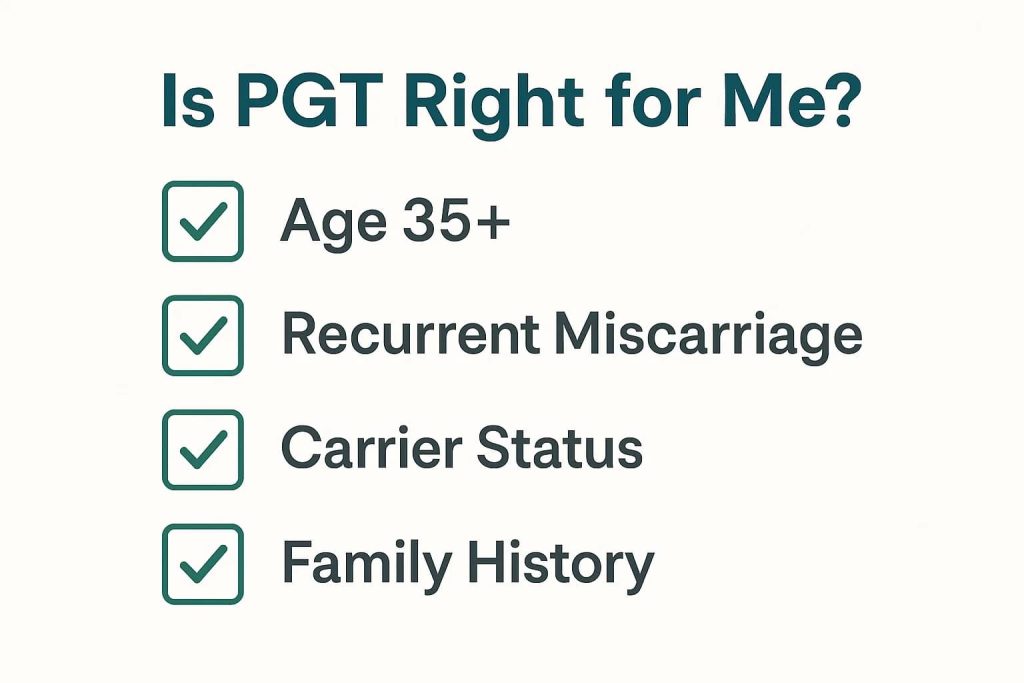
Is PGT Right for Me?
You might be a good candidate for PGT if:
- You’re 35 or older, as the risk of chromosomal abnormalities rises with age
- You’ve experienced multiple miscarriages or unsuccessful IVF cycles
- You or your partner carry a known genetic condition (e.g., cystic fibrosis, Tay-Sachs)
- Your family has a history of inherited disorders
Even if you feel healthy, unseen factors like being a carrier for a recessive gene can still affect your future children and PGT can help detect those.
Potential Benefits at a Glance
🧬 Lower Risk of Genetic Disorders
By identifying affected embryos early, you can choose to transfer only those with a normal genetic profile.
🎯 Improved IVF Success Rates
PGT helps pinpoint embryos with the highest chance of implantation and healthy development.
🧘♀️ More Informed Choices
Knowing more about your embryos can help reduce uncertainty and make difficult decisions feel clearer.
How Does the PGT Process Work?
Understanding how PGT fits into an IVF cycle can make the process feel less intimidating. Here’s a simplified walkthrough to show where genetic testing happens, and how it connects to the bigger picture.

🧪 Step-by-Step Breakdown of PGT
- IVF Begins
You’ll go through ovarian stimulation and egg retrieval as usual. Eggs are then fertilized in the lab. - Embryo Development
The fertilized eggs grow for about 5 to 7 days until they reach the blastocyst stage, which is when they have enough cells for testing. - Embryo Biopsy
A few cells are carefully removed from the outer layer of each blastocyst (the part that would become the placenta). This doesn’t harm the embryo itself. - Freezing & Testing
Embryos are frozen while the biopsied cells are sent for genetic analysis. Results typically take about 1–2 weeks. - Embryo Selection
Once the results are in, your doctor will recommend which embryos are most genetically viable for transfer in a future IVF cycle.
Is It Safe for the Embryos?
Yes, when performed by a skilled embryologist in a qualified lab. Studies show that embryo biopsy and freezing do not reduce success rates when done correctly.
What PGT Can and Cannot Tell You
PGT is a powerful tool, but like all medical testing, it has its strengths and limitations. Knowing both can help you set clear expectations and feel more confident in your choices.
✅ What PGT Can Identify
- Chromosomal abnormalities like Down syndrome, Turner syndrome, or trisomy 13
- Single-gene disorders such as cystic fibrosis, Huntington’s disease, or sickle cell anemia (if you or your partner are known carriers)
- Structural issues in chromosomes, like translocations or duplications, which can increase the risk of miscarriage or developmental problems
❌ What PGT Cannot Guarantee
- It won’t detect all possible diseases or future health conditions
- It doesn’t check for environmental factors, developmental issues, or rare unknown mutations
- It doesn’t replace prenatal testing (like NIPT or amniocentesis), which may still be recommended later in pregnancy
Making Informed Choices About PGT
Choosing whether or not to include PGT in your IVF journey is about doing what’s right for you. If you have a known genetic condition in your family, have experienced repeated IVF failure or miscarriage, or simply want as much information as possible before transfer, PGT might be a helpful option to explore.

What’s most important is that you feel supported through the process. At Lifespan Birth, we offer PGT as part of a comprehensive and thoughtful approach. Our team works closely with you to understand your goals, explain test results clearly, and help you make decisions with confidence and compassion.
In the end, PGT doesn’t promise perfection, but it can offer reassurance and reduce uncertainty when it matters most. If you’re considering IVF and want to understand your options more deeply, speaking with one of our fertility specialists is a great place to begin.