



If you’re building a career you love but also hoping to start a family one day, you may be wondering: should I freeze my eggs now, or wait? Will delaying IVF for a big promotion hurt my chances?
You’re not alone in asking these questions. Many women today are juggling career timelines with fertility planning, trying to find the “right time” for both. In this article, we’ll explore how age, work schedules, and fertility preservation options like egg freezing can impact IVF success. You’ll also find simple, science-backed advice to help you make confident choices, without putting your life on hold.
Career–Fertility and Why Timing Feels So Tricky
Many women are choosing to focus on their careers before starting a family, and for good reason. Career goals, promotions, and financial stability all matter. But while careers can usually follow a flexible timeline, fertility doesn’t always work the same way.
For example:
- Fertility starts to decline in your early 30s, with a more noticeable drop after 35.
- IVF success rates are strongly linked to age, especially the age of your eggs.
- Waiting too long to freeze eggs or begin treatment can lower your chances of pregnancy later on.
That’s why more people are asking: can I really wait until I’ve “made it” in my job before thinking about fertility?
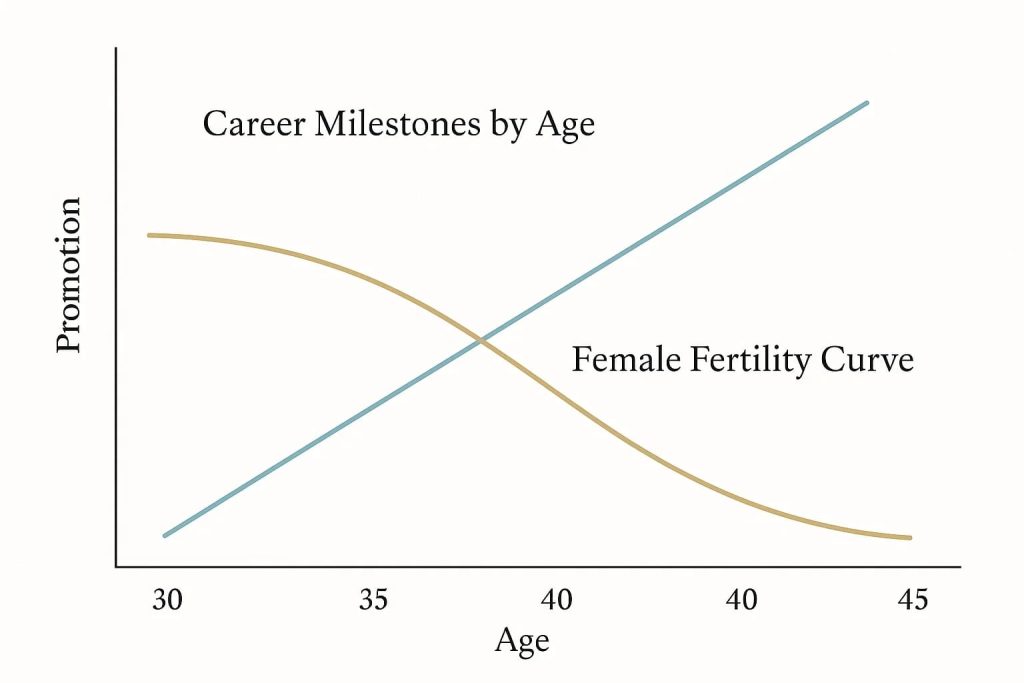
Real-Life Workplace Conflicts
Let’s say you’re up for a promotion or leading a big project. An IVF cycle, including monitoring and egg retrieval, might require 8 to 10 days off, possibly more if you include recovery time. Some people try to squeeze this into weekends or holidays, but it’s not always realistic.
Many workplaces don’t offer clear policies around fertility treatment leave, which can make things feel even more complicated.
Age, IVF Success, and Career Planning
IVF Success and Your Age
The most important factor affecting IVF success is the age of your eggs. Here’s a simple way to think about it:
- Under age 35: Higher success rates with both IVF and egg freezing
- Ages 35–37: A noticeable dip, but many still have good outcomes
- After 38: Egg quality and quantity decline more quickly, and chances of success drop
According to data, the chance of having a baby using your own eggs during IVF is about 42% if you’re under 35. That number falls to around 16% for women over 40.
This doesn’t mean you can’t have a healthy pregnancy after 35, it just means the odds start to shift.
What If You Delay Treatment?
Life doesn’t always move on a perfect schedule. You might wonder if taking a few extra months to focus on your job will make a big difference.
Good news: a 2020 study found that for women with low egg reserve, a short delay of less than six months in starting IVF didn’t lower pregnancy rates. But longer delays, especially past key age milestones, can have more of an impact.
If you’re trying to balance timing, it will help to speak with one of our fertility specialists who can assess your egg reserve (using tests like AMH and AFC) and give you a clearer picture of your options. At our clinic, this is often part of our first fertility checkup, especially for career-minded patients.
Should You Freeze Your Eggs?
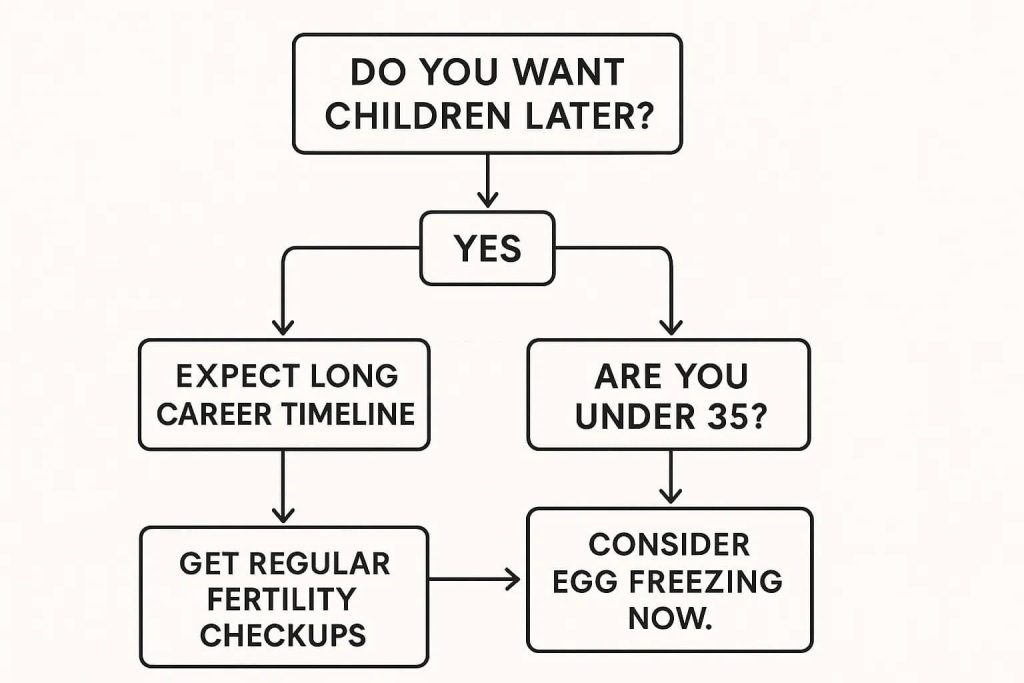
Egg freezing can be a smart way to preserve your fertility while focusing on your career. But the timing matters, and it’s important to understand how the process works before deciding if it’s right for you.
When Is the Best Time to Freeze Your Eggs?
The earlier you freeze your eggs, the better the quality and the more likely they are to result in a healthy pregnancy later. Here’s a general guide:
- Ages 25–35: This is considered the ideal time. Egg quality is higher, and fewer eggs may be needed to reach a good success rate.
- Ages 36–39: Still a good window, but more eggs may need to be frozen to have the same chance of success.
- After 40: Egg freezing is possible, but success rates tend to be much lower.
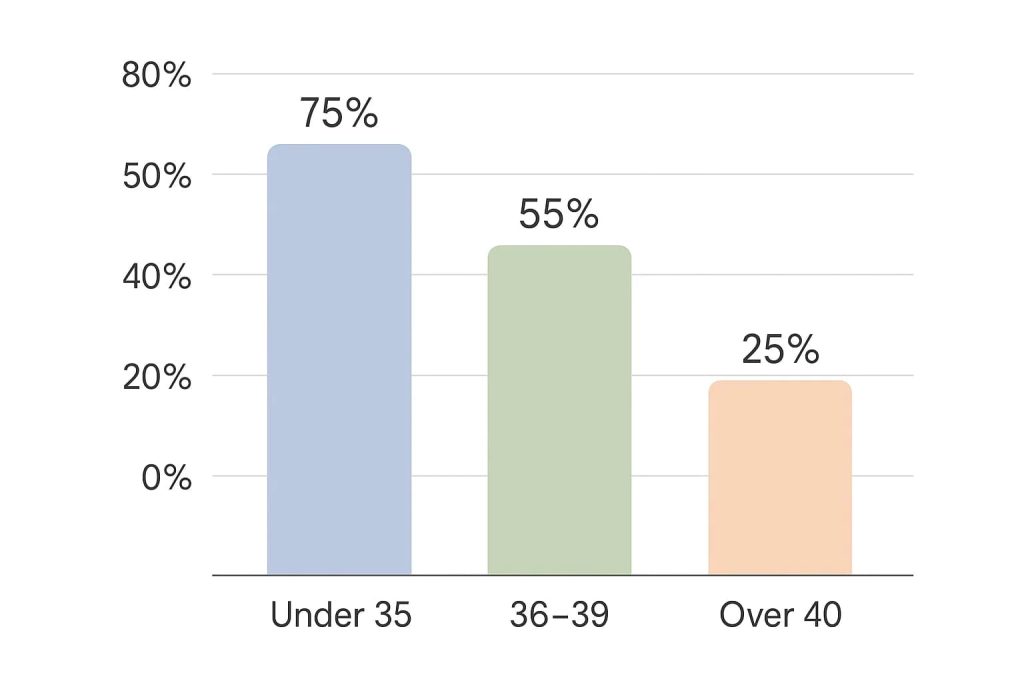
According to research, a woman under 35 who freezes 20 or more eggs may have a 70–80+% chance of having a baby later. That number drops significantly with age. For example, a woman over 38 might need 30 or more eggs for a similar chance.
How Long Does It Take?
The egg freezing process takes about 2–3 weeks. This includes hormone injections to stimulate the ovaries, regular scans, and finally, the egg retrieval itself. Most people take 1–2 days off work around the retrieval, but many are able to manage the rest of the process while continuing their usual routines.
If you’re planning a break between jobs, finishing a major project, or taking time off for a holiday, this could be a good opportunity to schedule the procedure without major disruption.
Things to Keep in Mind
Cost: Egg freezing can be expensive, and you may need more than one cycle to freeze enough eggs.
Storage: You’ll need to pay yearly storage fees to keep your frozen eggs until you’re ready to use them.
Not a guarantee: While freezing eggs can improve your chances later, it doesn’t promise a future pregnancy.
We can help you explore whether egg freezing fits into your personal and professional timeline. Our fertility services include customized care plans, supportive staff, and flexible scheduling to make things easier, especially if you’re coming from overseas or planning around a busy work calendar.
Practical Advice for Career-Minded People
Finding the right time for fertility treatment while building your career isn’t always easy, but it is possible. A bit of planning can go a long way, especially if you’re thinking about egg freezing, IVF, or just want to keep your options open for the future.
Make Use of Workplace Support (If It’s There)
Start by checking if your employer offers:
- Fertility benefits or insurance coverage
- Paid or unpaid leave for medical treatments
- Flexible work hours or remote options during treatment cycles
If these aren’t available, you might still be able to use sick leave or annual leave for appointments. Some people choose to have their egg retrieval done over a long weekend or holiday period to minimize disruption.
More companies are introducing fertility-friendly policies, so it’s worth asking HR, especially if your job involves travel, shift work, or long hours.
Sync Your Calendar for Work and Fertility Planning
Mapping your cycle and treatment timeline alongside your professional schedule can help reduce stress. Think about:
- Slower seasons at work when taking time off is easier
- Moments between major projects or role transitions
- Whether you’d benefit from freezing eggs now and planning IVF later
Don’t Forget Emotional and Financial Prep
IVF and egg freezing can be emotional. It’s okay to feel overwhelmed or uncertain, especially when you’re also focused on work.
What can help:
- Speaking with a counselor who understands fertility
- Budgeting in advance for treatment and storage costs
- Leaning on a trusted support system, whether a partner, close friend, or care team
At Lifespan Birth, we help patients plan cycles around key life events. Whether you need to coordinate with a tight project deadline or travel from overseas, our team can build a timeline that fits your life, not the other way around.